By: Tijani Salako.
The Federal Government has expressed confidence that Nigeria’s economy is on a firmer footing following two years of sweeping reforms, projecting 4.1 per cent economic growth by the end of 2026, foreign reserves of $58 billion and a Gross Domestic Product (GDP) of about N530 trillion, even as businesses continue to grapple with inflation and high borrowing costs.
The Federal Government on Wednesday defended its economic reform programme, saying key macroeconomic indicators are beginning to reflect improved stability despite global economic headwinds and the domestic cost-of-living challenges triggered by policy adjustments.
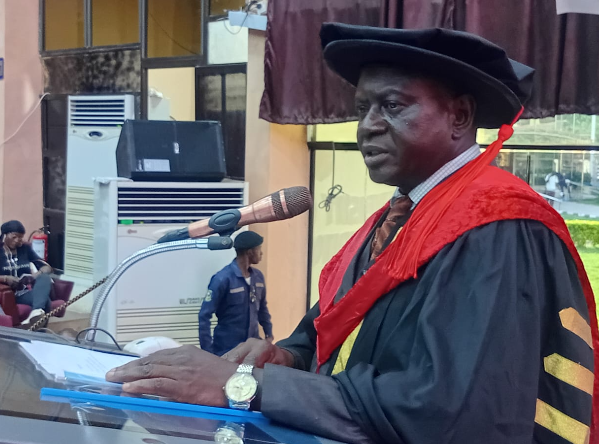
Special Adviser to the President on Economic Affairs in the Office of the Vice President, Dr. Tope Fasua, presented the government’s mid-year economic scorecard at the Lagos Chamber of Commerce and Industry (LCCI) 2026 Mid-Year Economic Review and Outlook Conference in Lagos.
Fasua said the reforms initiated by the Tinubu administration, including the removal of petrol subsidy, exchange rate reforms, monetary policy adjustments, debt restructuring efforts, tax reforms, customs reforms and measures to deepen local government autonomy, were gradually repositioning the economy for sustainable growth.
According to the presentation, Nigeria’s economy is expected to grow by 4.1 per cent this year despite a slowing global economy, while inflation is projected at 15.93 per cent. The government is also targeting foreign reserves of $58 billion by the end of 2026 and an economy valued at about N530 trillion.
Fasua also pointed to improvements in infrastructure, including roads and primary healthcare centres, as evidence that public investment is beginning to yield tangible results.
The presidential adviser argued that agriculture, manufacturing and services remain the backbone of the economy, accounting for about 87 per cent of Nigeria’s GDP, while stressing that increased mechanisation, industrialisation and the expansion of Micro, Small and Medium Enterprises (MSMEs) would be critical to sustaining economic growth.
On fiscal performance, the government disclosed that tax revenue rose by 49 per cent in the first half of 2026 to N21.6 trillion from N14.27 trillion recorded in the corresponding period of 2025.
The increase, according to the presentation, followed the implementation of fiscal reforms, digitalisation of the Nigeria Revenue Service and the introduction of new tax measures across key sectors of the economy.
Fasua further highlighted improvements in Nigeria’s external sector, noting that exports have increased by about 30 per cent while imports declined by a similar margin, resulting in 12 consecutive quarters of trade surplus.
He added that the country has also recorded improvements in its balance of payments, moving from a deficit of $3.34 billion in 2023 to surpluses of $6.23 billion in 2024 and $4.23 billion in 2025.
The presentation also highlighted renewed investor confidence in Nigeria’s capital market, noting that both S&P Dow Jones Indices and FTSE Russell have placed Nigeria on watchlists for possible reclassification into the Frontier Market category following improvements in foreign exchange reforms and capital market operations.
According to Fasua, domestic manufacturing is also gaining momentum, with several Nigerian companies increasingly exporting processed food, consumer goods, pharmaceuticals, automobiles, defence equipment, leather products and solar panels across Africa.
He listed firms including Dangote Group, BUA Foods, Nestlé Nigeria, Flour Mills of Nigeria, Innoson Vehicle Manufacturing, Proforce and several fast-moving consumer goods manufacturers as companies driving Nigeria’s export expansion.
Speaking at the conference, LCCI President, Engr. Leye Kupoluyi, said Nigeria’s economy is passing through a defining period characterised by reforms, resilience and persistent global uncertainties.
He observed that businesses continue to contend with supply chain disruptions, geopolitical tensions, fluctuating oil prices, tariff wars and food security concerns, making regular economic dialogue between the government and the private sector increasingly important.
Kupoluyi maintained that sustainable economic growth must remain private sector-led, productivity-driven and people-centred.
According to him, the Chamber will continue to advocate improved ease of doing business, regulatory efficiency, stronger support for MSMEs, enhanced trade facilitation, industrial competitiveness, digital transformation and innovation as critical drivers of long-term economic growth.
Also presenting the financial markets outlook, FirstBank Group Chief Economist, Chinwe Egwim, said Nigeria’s macroeconomic indicators have become more consistent compared to previous years.
She noted that headline inflation stood at 15.9 per cent in mid-2026, while external reserves increased to $51.45 billion and the naira traded around N1,380 to the US dollar in the Nigerian Foreign Exchange Market (NFEM). The Nigerian Exchange also recorded a 47 per cent gain, reflecting improved investor sentiment.
Egwim projected GDP growth of between 4.1 and 4.3 per cent in the second half of the year, driven by stronger performance in ICT, financial services and improving crude oil production.
She also projected external reserves of between $50 billion and $53 billion, exchange rate stability within N1,350 and N1,450 to the dollar, and oil production of between 1.7 million and 1.8 million barrels per day, while cautioning that inflation would remain elevated despite moderating pressures.
She advised businesses to remain cautious in capital expenditure decisions due to high financing costs, strengthen liquidity management, incorporate inflation and exchange rate assumptions into pricing strategies, and prioritise investments capable of delivering stronger returns in the prevailing economic environment.
The conference brought together government officials, economists, financial experts and business leaders to assess Nigeria’s economic performance in the first half of 2026 and outline expectations for the rest of the year amid ongoing reforms and global economic uncertainties.