Lately, I have been met with a silent realization that history rarely retires. Oftentimes, it only changes clothes and walks back into power. You may realize how poignant this fact is when you consider the current geopolitical chaos across the world. From smoking war fronts to jittery markets that shed trillions, displaced millions of refugees, and geographical and border disagreements—among many rancors. Although these rancors are often blamed on weak leadership, self-interest, or strategic collisions, beneath these opinions lie old British imperial choices perilously made in London centuries ago, which still breathe today, as their delayed tremors crash into the present global chaos.
The British Empire, which ruled much of the world for centuries, made several crippling mistakes that still bite the world today. From forceful partitions to illegal declarations, resource plundering, forced amalgamations, and crippling financial systems, among others. For instance, can we pay attention to the sui generis nature of the current India–Pakistan tension? Their longstanding rifts and wars remain the clearest proof that a border drawn in haste can bleed for generations. The existing chaos between these two countries dates back to the British exit in 1947, which left behind a rushed partition that displaced about 14 million people and killed roughly one million—one of the largest forced migrations in human history. Kashmir was forcibly suspended between two newborn states, a move many across the world condemned as a geopolitical blunder. To this very moment, these two nuclear-armed nations still circle each other while draining billions into defense, despite the excruciating poverty eating deep into their societies.
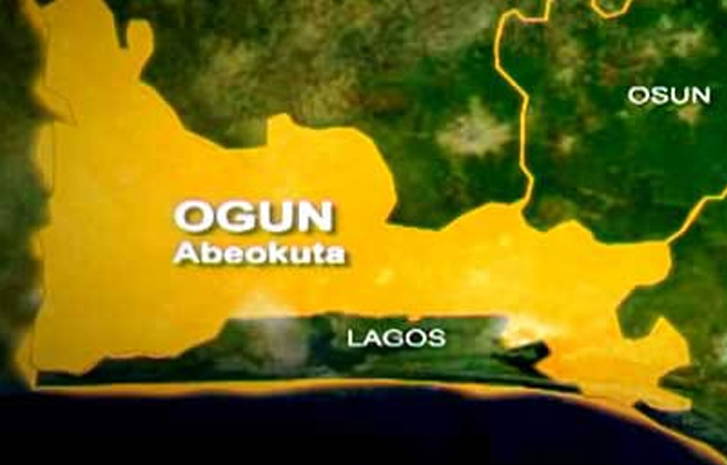
The British Empire also forcibly merged borders without listening to the cries of the people. My country, Nigeria, for instance, is a clear indication that a forced unity can ferment permanent insecurity and economic woes. The British Empire amalgamated the Northern and Southern parts of Nigeria in 1914, selfishly and mainly for administrative convenience. Yet, they never corrected this error despite agitations from foremost Nigerian nationalists like Herbert Macaulay, Adegboyega Edun, and Orisadipe Obasa, among others. Nigeria was forced to inherit a structure that ignored religious, political, social, and cultural rhythms—and the end result? Boko Haram insurgency, banditry and kidnappings, separatist agitations, farmer–herder violence, and biting economic turbulence. Today, despite Nigeria being Africa’s largest economy, the country still bleeds internally and remains ravaged by insecurity, largely from the northern parts, where the anachronistic Almajiri system has done immense harm. The recent false claim of a “Christian genocide” by the American president, which led to a Christmas Day airstrike in Sokoto, is a sour fruit from this ungraceful tree of insecurity. Ironically, the region is dominated by Muslims, and far more Muslims have been killed than Christians. Sadly, this only reminds me of the proverbial saying: “When the roots of a tree begin to decay, it spreads death to the branches.” The roots here were never organically planted; they were artificially devised by the forceful amalgamation of the self-serving British Empire.
Worthy of major mention is the ongoing Palestine–Israel war, which stands as a global moral wound that refuses closure. Since October 7, 2023, Israel has been responsible for the deaths of about 71,000 Palestinians in what Amnesty International and millions across the world have described as a clear “genocide.” Yet, the genesis of this crisis must not be overlooked—it is another error of the British Empire. The 1917 Balfour Declaration promised the same land to different peoples, a contradiction that was abandoned rather than resolved. In a historic letter addressed by Arthur Balfour, Britain’s then foreign secretary, to Lord Rothschild, a homeland was promised to the Jews in Palestine by an empire that did not even belong there. Only sixty-seven words were used, yet more than a century of fire, genocide, sectarian cleansing, and chaos has been lived inside them. That single letter continues to dictate borders, grief, and resistance even in 2026. Britain left, but chaos stayed.
It is imperative to add Sudan and South Sudan to this discourse. The chaos in these countries clearly shows that separation from the British Empire without healing birthed endless instability. British colonial administration spearheaded the North–South divisions that independence later inherited. South Sudan’s civil war has displaced over four million people and destabilized the Horn of Africa. The chaos has not ceased to this day. Refugee flows strain neighboring economies already gasping for survival, forcing the global humanitarian system to groan, while the British Empire—original architects of the division—remains a historical footnote.
When author Walter Rodney argued in How Europe Underdeveloped Africa that “underdevelopment was not accidental; it was engineered,” I cannot help but agree. One must consider how the British Empire engineered and fermented trouble in Kenya. Fertile lands were seized, and post-independence reforms never truly corrected the injustice. The 2007 election violence was rooted in land grievances that killed over 1,100 people. Inequality feeds unrest; unrest scares investment. Capital flees, currencies weaken, and Africa’s growth promise is delayed.
Iraq and the wider Middle East also remain trapped in British colonial mismanagement. Britain forcibly fused Sunni, Shia, and Kurdish regions into one mandate state, fully aware of their ideological differences. Kurdish aspirations were ignored, and today Kurdish struggles stretch across Iraq, Syria, and Turkey, destabilizing NATO alliances and U.S. military strategy. America has long claimed to fill the vacuum Britain left, yet stability remains elusive. War economies thrive where political design fails—and the British Empire failed in political design here.
Debt and dependency further reveal the British Empire’s economic misgivings. Former British colonies dominate IMF and World Bank loan registers. According to World Bank data, over 80 percent of IMF borrowers are former colonies. Structural adjustment replaced colonial rule, enforcing austerity while wealth continued to flow north. Many weak former colonies remain heavily dependent on crippling IMF and World Bank loans. These loans are crippling because they come with stringent conditions that meddle in internal affairs—dictating economic policies, trade partners, financial blocs, and institutional alignments. Such conditions trap countries in cycles of dependency, forcing them to return repeatedly for loans. This explains why many indebted nations must cautiously question foreign policy shifts, such as alignment with BRICS, due to their heavy indebtedness to Western financial institutions.
Sadly, America is repeating many mistakes once made by the British Empire. Believing power lasts forever is an illusion—history has a habit of retiring empires. Many current U.S. actions are uniting the world against it. Even NATO, composed largely of American allies, has threatened military support for Denmark against the U.S. over Greenland. Major allies like Saudi Arabia now pursue security pacts with Pakistan after Israel struck Qatar last spring, allegedly targeting Hamas members, without any American response. The forceful takeover of Palestinian land, backed by AIPAC and neoconservative interests, is another troubling example. Proxy states are controlled, borders are forced, proxy wars echo imperial impulses, and economic sanctions, tariffs, and trade routes are prioritized over human cost—exactly the pitfalls the British Empire failed to avoid.
So, how long does the sun truly remain overhead of America?