By: Goodluck E. Adubazi, Abuja.
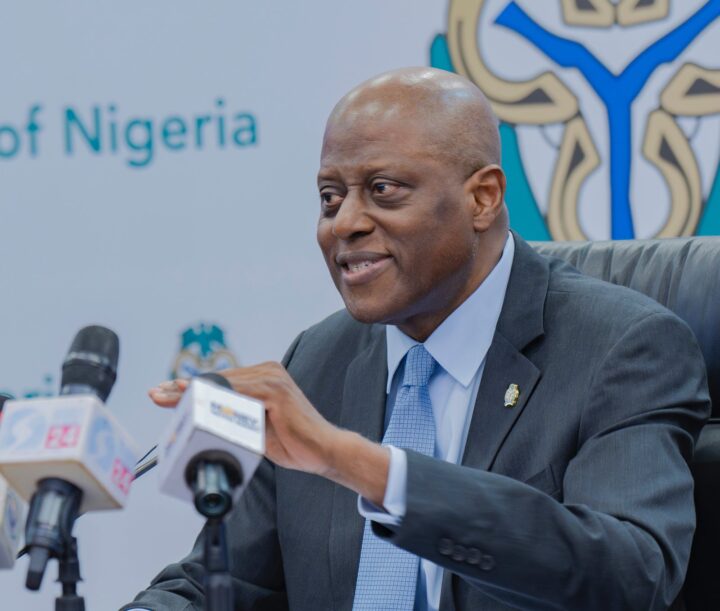
The Managing Director of Sterling Bank, Abubakar Suleiman, has said the economic reforms introduced by President Bola Tinubu’s administration have made Nigeria better than it was before, but stressed that the government must now focus on stimulating domestic demand and improving the productivity of small businesses to translate the reforms into widespread prosperity.
Suleiman made the remarks during a fireside chat at the Development Bank of Nigeria (DBN) Annual Lecture 2026, themed “From Policy to Prosperity,” Translating Economic Reforms Into MSMEs Growth, held on Wednesday, October 21, at the Transcorp Hilton, Abuja.
He acknowledged the economic difficulties faced by entrepreneurs and businesses across the country, noting that while reforms had established a more predictable economic environment, more needed to be done to ensure that businesses could grow and ordinary Nigerians could feel the benefits.
According to him, assessing the impact of the reforms requires an understanding of the challenges businesses faced before the current administration’s policy changes, particularly difficulties accessing foreign exchange for legitimate transactions.
“If you have not lived through 2002 through 2022 and 2023 in this country, you will not understand how difficult it was to pay $1,000 in an invoice from a Chinese supplier,” he said.
Suleiman disclosed that Sterling Bank had, for about two and a half to three years, struggled to secure €19 million needed to establish a factory because of difficulties obtaining foreign exchange to import equipment.
He said the experience demonstrated the importance of creating a predictable economic environment where investors could access the resources required to establish and expand businesses.
According to him, Nigeria has moved from a situation where businesses faced considerable uncertainty to one in which economic conditions have become relatively more predictable.
He, however, emphasised that the government must move beyond establishing a stable policy environment to ensuring that the benefits of reforms reach businesses and households.
“There are two ways government reforms can affect medium and small businesses. The first is demand,” he said.
The Sterling Bank chief explained that many small businesses possessed the skills and capacity to produce goods and services but struggled to sell their products during difficult economic periods.
He argued that government policies should therefore prioritise activities that stimulate domestic demand, create jobs and enable local businesses to generate sustainable revenue.
Suleiman illustrated his point by contrasting projects that depend heavily on imported equipment with those that create opportunities for local contractors, workers and suppliers.
He said distributing infrastructure projects across communities could stimulate economic activities, generate employment and strengthen local productive capacity.
The bank chief also identified multiple taxes, levies, regulatory charges, energy costs and limited access to finance as major constraints on business productivity.
He noted that although the federal government had made progress in tax reforms, businesses continued to face multiple levies and frequent demands from different authorities.
According to him, the government must extend the principles of tax reform to other charges imposed on businesses, particularly at the state and local government levels.
“People don’t mind paying taxes. They just don’t want to pay 20 different people after 50 different arguments,” he said.
Suleiman maintained that reducing the number of government agencies and officials businesses must deal with would improve productivity and create a more favourable environment for investment.
He argued that lowering interest rates or providing cheaper loans would not be sufficient if businesses continued to lose time and resources dealing with multiple government demands.
He called on state and local governments to replicate the federal government’s reform efforts by simplifying regulations, eliminating unnecessary levies and making it easier for businesses to operate.
Calls for Growth-Oriented Regulation
Suleiman further urged regulators to adopt a growth-oriented approach rather than concentrating predominantly on risk management and compliance.
He said regulatory institutions should assess their performance partly by how effectively they improve the productivity and competitiveness of the sectors under their supervision.
According to him, Nigeria must build an environment in which local manufacturers can produce goods at competitive prices and quality standards, attracting customers from across Africa.
He also argued that African Continental Free Trade Area (AfCFTA) would create greater opportunities for Nigerian businesses if the country strengthened its domestic production capacity.
Rather than concentrating excessively on competition, he said Nigeria should prioritise productivity, explaining that efficient businesses would naturally attract customers and investment.
The Sterling Bank managing director also called for stronger government involvement in financing sectors where private investors might be reluctant to take risks because of uncertain returns.
He argued that developing industries and productive ecosystems required more than providing cheap liquidity, adding that governments should introduce risk-sharing arrangements that encourage private capital to support emerging businesses.
Suleiman said government-backed risk-sharing mechanisms could help businesses transition from venture capital and private equity funding to commercial bank financing without becoming trapped in repeated fundraising cycles.
He disclosed that Sterling Bank had recently launched a $200 million fund in London in partnership with Cascade, aimed at supporting businesses as they transition from equity financing to debt and commercial funding.
According to him, the arrangement would use risk guarantees to mobilise additional financing, with the ambition of leveraging the fund fivefold to generate up to $1 billion in financing capacity.
He explained that such mechanisms could help businesses that had reached the stage of requiring bank financing but struggled to secure loans because of the risks associated with their operations.
Suleiman stressed that government support should extend beyond individual companies to include the wider ecosystems necessary for businesses to succeed, including suppliers, quality-control institutions and other supporting services.
He also urged state governors to take greater responsibility for economic development, arguing that state governments were strategically positioned to coordinate investments because they controlled land, local infrastructure and development spaces.
According to him, state governments could bring development finance institutions and private investors together to build productive industrial clusters tailored to their respective economic strengths.
He cited China’s regional development model as an example of how specialised industrial ecosystems could help businesses become more competitive.
Suleiman said Nigeria’s states should identify sectors in which they could develop competitive advantages and build the infrastructure, financing arrangements and supporting institutions required to make those sectors thrive.
He maintained that relying exclusively on the Federal Government to drive economic development would limit progress, particularly in areas where state governments had the capacity to coordinate local investment and production.
Suleiman further identified food inflation as a major obstacle to domestic demand, warning that rising food prices leave households with less money to spend on other goods and services.
He said reducing food inflation would help ease pressure on interest rates, improve affordability and support broader economic activities.
According to him, high food prices weaken purchasing power, particularly among low- and middle-income households, thereby limiting the market available to small businesses.
He argued that economic reforms would deliver more meaningful results when households had sufficient disposable income to purchase goods and services produced by local enterprises.
Suleiman concluded that Nigeria’s economic transformation required coordinated action by the Federal Government, state governments, regulators, financial institutions and private businesses.
He stressed that while the federal government had established a foundation for reform, the next phase must focus on stimulating domestic demand, strengthening productivity, reducing bureaucratic bottlenecks and building productive ecosystems capable of generating sustainable prosperity.