By: Goodluck E. Adubazi, Abuja.
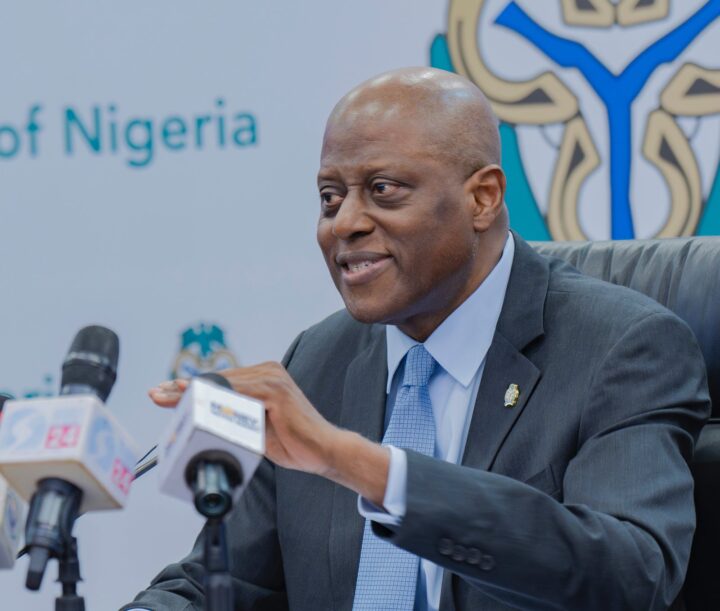
The Chief Executive Officer of MTN Nigeria, Karl Toriola, has disclosed that an estimated eight million small businesses, representing about 20 per cent of Nigeria’s Micro, Small and Medium Enterprises (MSMEs), exited the market between 2023 and 2024, warning that urgent interventions are needed to translate economic reforms into sustainable business growth.
Toriola said although the Federal Government’s macroeconomic reforms had restored confidence among major investors and encouraged reinvestment in the economy, the benefits were yet to trickle down to small businesses and informal entrepreneurs.
He spoke on Wednesday in Abuja at the 2026 Development Bank of Nigeria (DBN) Annual Lecture, themed “From Policy to Prosperity: Translating Reforms into MSME Growth.”
According to him, while the reforms were painful but necessary, small businesses continued to face severe operational challenges, forcing many into survival mode and undermining their profitability.
“For macroeconomic statistics, the people at the top of the economy are now confident to continue to reinvest in the economy, and that drives all the activities that we talk about. So it was painful, and it was absolutely necessary, and the corporate Nigerian economy is starting to function well,” he said.
However, he stressed that the survival of small businesses remained a major concern, noting that the reported closure of millions of enterprises exposed a significant gap between policy formulation and implementation.
Toriola identified limited access to finance, high energy costs, multiple taxation, inadequate digital infrastructure and weak coordination among government agencies as major obstacles to MSME development.
The MTN chief executive described access to finance as one of the most significant barriers to business expansion in Nigeria.
Citing the 2024 MSME survey by the Partnership for Delivery of Wealth (PDW), he said the country faced an estimated $32.2 billion, equivalent to about ₦13 trillion, in unmet financing needs, with 35 per cent of respondents identifying finance as their primary obstacle to growth.
He added that fewer than one in 20 small and medium-sized enterprises could secure loans from traditional banks.
According to him, conventional lending requirements, including audited financial statements, rigid collateral conditions and high interest rates, have excluded millions of informal businesses from the formal credit system.
He recalled that previous MSME financing initiatives struggled because many informal operators lacked the documentation and collateral required to qualify for support.
Toriola further cited findings attributed to fintech company Moniepoint, indicating that more than half of informal businesses actively avoided government-backed financing programmes and had no intention of applying for such loans.
He argued that business owners operating on daily cash flows would naturally avoid credit facilities whose requirements were incompatible with their business structures.
“When a trader managing a daily cycle is offered working capital with rigid collateral demands, high interest rates and audited financial requirements, walking away is the only rational business decision,” he said.
To address the financing challenge, Toriola called for Nigeria to adopt digital credit assessment models that evaluate businesses using transaction histories and other alternative data rather than relying exclusively on conventional banking records.
He cited India and Kenya as examples of emerging economies that had developed innovative systems to extend financial services to informal entrepreneurs.
According to him, India’s digital public infrastructure combines universal identification with digital payment systems, making it easier to identify individuals, track financial activities and assess creditworthiness.
He also pointed to Kenya’s mobile-money ecosystem, which uses transaction volumes, payment frequency and mobile-money flows to assess borrowers’ capacity to repay loans.
Toriola maintained that Nigeria could replicate similar approaches by leveraging telecommunications records, digital payments, utility bills and other verifiable financial footprints.
He explained that telecommunications operators already possess data that could help determine customers’ financial behaviour, including the length of time they have used a network, their monthly spending patterns and the frequency of their transactions.
He said such information could help lenders build credit profiles for millions of underserved Nigerians without demanding conventional collateral.
“At MTN, we lend tens of billions of naira to customers with very low default rates without any collateral,” he said, explaining that customers’ network history, spending patterns and transaction frequency could provide useful indicators for assessing creditworthiness.
He urged the Central Bank of Nigeria and national credit bureaus to establish regulatory frameworks that would allow alternative data to be incorporated into credit assessment systems.
He also called for government-backed institutions, including the Development Bank of Nigeria and other development finance agencies, to strengthen risk-sharing arrangements and support cash-flow-based lending to MSMEs.
Toriola said Nigeria must establish an integrated digital infrastructure that enables lenders to identify businesses, verify ownership and assess their operating histories through a single system.
He proposed an interoperable framework connecting the National Identification Number (NIN), Bank Verification Number (BVN) and Corporate Affairs Commission (CAC) registration records.
According to him, fragmented identification and business registration systems increase the cost of identifying borrowers and prevent many legitimate enterprises from accessing formal financing.
He said a unified digital identity system would simplify customer verification, reduce lenders’ acquisition costs and make it easier to extend credit to businesses operating outside the formal economy.
The MTN boss also called for greater deployment of digital platforms to help small businesses reach customers, manage transactions and expand beyond their immediate communities.
He urged state governments to explore partnerships with telecommunications operators to develop digital marketplaces, storefronts, customer management tools and secure payment systems.
Toriola said MTN remained open to strategic partnerships with federal, state and local governments to expand digital commerce and improve access to markets nationwide.
Harmonise Taxes,
The MTN chief executive warned that providing finance to small businesses would achieve little if their working capital was continually depleted by multiple taxes, levies and high energy costs.
He called for the harmonisation of state and local government taxes, urging the Joint Revenue Board to align subnational charges and establish unified digital tax portals.
According to him, the impact of federal tax exemptions would remain limited if local councils continued to impose multiple, uncoordinated levies on small businesses.
He also called for urgent action to address Nigeria’s electricity challenges, recommending targeted interventions such as solar-powered mini-grids and shared equipment facilities to reduce operating expenses.
He said lowering energy costs would improve business profitability and give entrepreneurs more resources to invest in expansion, employment and productivity.
Toriola further advocated government procurement policies that deliberately create market opportunities for MSMEs, arguing that access to reliable customers and revenue streams was essential for business survival.
Seeks Accountability in MSME Policies
Beyond financing and infrastructure, Toriola stressed the need for accountability and inclusive governance in the implementation of policies targeting small businesses.
He proposed the establishment of a central MSME delivery unit supported by a public performance scorecard to measure the effectiveness of government interventions.
According to him, relevant agencies, including development finance institutions and the Bank of Industry, should regularly report the number of businesses reached and the impact of their programmes on enterprise survival and growth.
He also called for trade associations, market unions, chambers of commerce and other business groups to participate directly in policymaking, including the development and implementation of the national MSME policy.
Toriola maintained that policies would continue to underperform if they were designed without adequate consultation with the businesses they were intended to support.
He said the private sector and government must work together to ensure that economic reforms produced measurable improvements in the lives of ordinary Nigerians.
“The mandate for all of us now, including the private sector, is to harmonise the tax code, unlock alternative data-driven finance, lower energy overheads, scale the digital tools that are becoming increasingly available, and hold institutions accountable,” he said.
He added that the ultimate measure of successful economic reforms was not the policies announced by government but their ability to create thriving enterprises, sustainable employment and improved living standards.
“That is how policy on a piece of paper becomes a thriving enterprise on the street, and how today’s reforms forge enduring prosperity,” Toriola said.