…Urges Africa to embrace productive investment, innovation, jobs and human capital as GS-26 opens in Abuja
By: Goodluck E. Adubazi, Abuja.
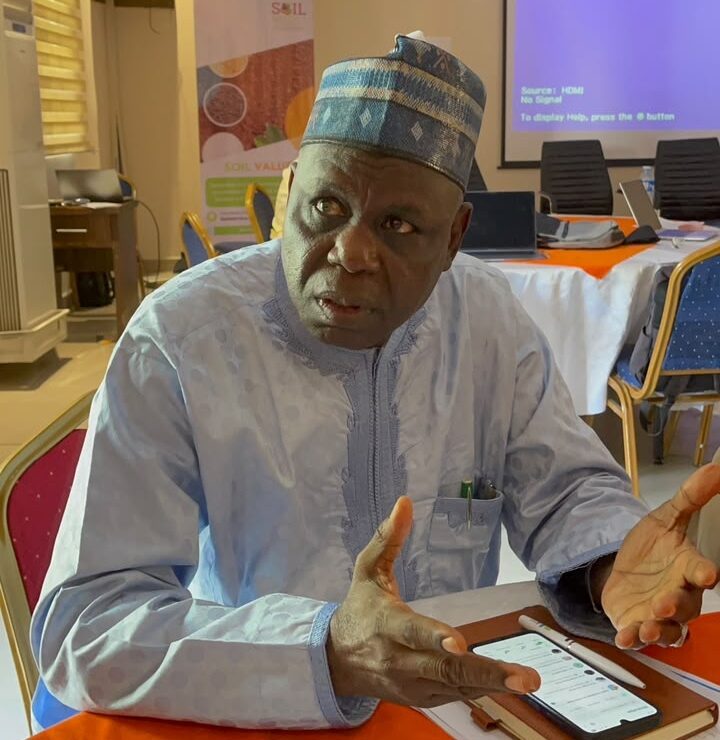
Africa imports more than $100 billion worth of food annually despite possessing enormous agricultural potential, while an estimated 89 per cent of children in Sub-Saharan Africa suffer learning poverty, unable to read and understand a simple text by the age of 10, Côte d’Ivoire, Former Prime Minister and President of the National Assembly of Côte d’Ivoire, Patrick Achi, has said.
Achi raised the alarm on Tuesday at the opening of the Gender and Inclusion Summit 2026 (GS-26) organised by the Policy Innovation Centre (PIC) at the Abuja Continental Hotel.
The two-day summit, held from September 8 to 9, is themed: “From Agenda to Action: Making Innovations Count for the Last Mile.”
The former Prime Minister of Côte d’Ivoire said Africa must urgently confront the contradictions limiting its economic transformation, particularly the continent’s inability to convert its vast natural resources, youthful population and agricultural potential into sustainable prosperity.
According to him, Africa accounts for about 18 per cent of the world’s population and is projected to account for about one-quarter of the global population by 2050, when its population could reach approximately 2.5 billion people.
He said the continent’s youthful population should represent a major economic advantage, noting that a significant proportion of Africans would be below the age of 25.
However, Achi lamented that Africa’s contribution to the global economy remains disproportionately low.
“Africa represents around 18 per cent of the world’s population, and by 2050, we are going to be a quarter of the population of the world,” he said.
“Yet, we account for only about three per cent of global GDP, three per cent of global trade and about two per cent of global manufacturing value added and exports.
“And yet, transformation and exports are where sustainable growth and wealth lie.”
Achi described Africa’s dependence on food imports as one of the clearest examples of the continent’s economic challenges.
Despite its enormous agricultural resources and its capacity to feed not only its population but potentially contribute significantly to global food security, Africa continues to spend more than $100 billion annually importing food.
He also expressed concern over the low level of irrigation across the continent.
According to him, only about four per cent of Africa’s agricultural land is irrigated, compared to more than 40 per cent in parts of Southeast Asia.
He said the figures demonstrated the urgent need for Africa to move beyond the export of raw materials and embrace productive investment, value addition, industrialisation and competitive enterprise.
Achi said poverty had progressively become concentrated in Africa, partly because the continent had failed to sufficiently transform the resources it produces.
“Part of the answer lies in what we produce and, even more importantly, how little we transform,” he said.
The Côte d’Ivoire parliamentary leader said Africa’s education crisis presented an even more serious warning for the future.
He said an estimated 89 per cent of children in Sub-Saharan Africa are in learning poverty, meaning they are unable to read and understand a simple text by around the age of 10.
According to him, the challenge goes beyond education and represents a major threat to Africa’s future productivity and competitiveness.
“Tomorrow, competition will not be about natural resources alone. It will be about human capability,” Achi said.
He also drew attention to Africa’s widening gap in science, technology and innovation, warning that the continent risks being left behind as the world enters an era increasingly driven by artificial intelligence and advanced technologies.
He said countries such as China were producing millions of graduates in Science, Technology, Engineering and Mathematics, STEM, while Sub-Saharan Africa continued to face serious shortages of researchers and skilled professionals.
“This is not simply an education gap,” he said. “It is a future productivity gap.”
Achi said Africa should study the experiences of countries that successfully transformed their economies, while recognising that there was no single development model.
He said China, Singapore, Vietnam and South Korea had different development paths, just as countries in Latin America pursued their own approaches.
However, he said one common factor stood out: transformation built around productive investment, competitive enterprises, job creation and capable institutions.
He cited China’s remarkable development experience, noting that more than 800 million people were lifted out of poverty over several decades.
The Côte d’Ivoire leader said Africa should remain hopeful about its future but must combine ambition with vision, pragmatism and sustained implementation.
“So we have to be hopeful for Africa,” he said. “Everything is possible. But the lesson is that everything has to do with vision and pragmatism.”
Achi said Africa must move beyond approaches that merely manage poverty without creating sustainable pathways out of it.
While acknowledging the importance of aid, grants, cash transfers and social protection, he warned against creating systems that become permanently dependent on poverty management.
“Cash transfers and grants can be essential bridges,” he said. “They can save lives and protect dignity. But if the bridge never leads to productive income, we remain vulnerable to the day the grant stops.”
He said lasting inclusion must be driven by productive economic activity, enterprise, employment and rising incomes.
According to him, social protection should protect vulnerable people from shocks and preserve dignity, while productive employment should provide them with opportunities to build sustainable livelihoods.
“No continent can sustainably lift hundreds of millions of people into prosperity through redistribution alone,” Achi said.
“At scale, lasting inclusion requires productive activity, enterprise, jobs and rising income.”
He said women and young people must no longer be treated as groups added as an afterthought to economic policies.
Instead, he said, they must be recognised as central to the size, quality and future of Africa’s economy.
Drawing from Côte d’Ivoire’s development journey, Achi said the country had made significant progress since emerging from a major political, social and economic crisis in 2011.
He said the country’s initial priorities were to restore peace and security, rebuild institutions, develop infrastructure and reconnect citizens to public services and economic opportunities.
According to him, Côte d’Ivoire has expanded access to electricity, infrastructure, education, technical training and social protection.
He said electricity access increased from about 74 per cent in 2011 to 99 per cent by 2025, while the country continued to focus on improving the quality of access and reducing the distance between citizens and opportunities.
However, he stressed that access alone was not enough.
“Access is not the end of inclusion. It is just the beginning,” he said.
“A school place must become learning. Training must become knowledge and capability. Access must become productivity and income.”
He urged African leaders and policymakers to focus on converting access into human capability, economic productivity and sustainable prosperity.
Earlier, the Executive Director of the Policy Innovation Centre, Osasuyi Dirisu, said GS-26 was designed to examine how innovative solutions could reach the people and communities that need them most.
She explained that the concept of the “last mile” should not be misunderstood as merely referring to geographical distance.
According to her, the last mile could also refer to people’s conditions and their lack of access to resources, finance, education, healthcare, literacy and economic opportunities.
“The last mile for us means ensuring that the end user who needs the solutions we are developing the most is reached,” Dirisu said.
“Sometimes, it is a location, but sometimes it is a condition. It is about access to resources, financing and opportunities such as education, literacy and healthcare.”
She said the summit would deliberately bring people from grassroots communities into the policy conversation to ensure that discussions and proposed solutions reflected their lived realities.
Dirisu said beneficiaries of development programmes, including farmers and women from grassroots communities, were being given opportunities to share their experiences and challenges directly with policymakers, development partners and other stakeholders.
“We may not be able to take everybody to the last mile, but we are bringing the last mile right into the conversations here at GS-26,” she said.
She added that participants would, over the two-day summit, examine practical solutions to challenges facing communities and vulnerable populations.
The PIC Executive Director also disclosed that young Nigerians would play a major role at the summit.
She said a Dream Charter co-created to give young people an opportunity to articulate their aspirations and vision for the future would be launched during the summit.
Dirisu further announced that GS-26 would host an all-day youth conference, providing young Nigerians with a platform to contribute directly to discussions about the future they want to build.
“For the first time at the Gender and Inclusion Summit, young people will have the opportunity to hold an all-day youth conference right here at GS-26,” she said.
On the role of government in implementing last-mile solutions, Dirisu said the summit was not designed to compel government but to create an enabling environment for collaboration among stakeholders.
“You cannot force the government to do anything, but what you can do is create an enabling environment for collaboration to happen,” she said.
“That is why we are bringing everybody together—government, civil society, the private sector, development partners and communities—to see how we can make this work and challenge ourselves to change the system.”
She said PIC would continue to deploy advocacy and partnerships to drive the changes required to ensure that innovation and development interventions reach those at the grassroots.
In his welcome address, Chairman of the Policy Innovation Centre, Mr. Udeme Ufot, said the Gender and Inclusion Summit had evolved into an important platform for dialogue, evidence, collaboration and collective action on gender equality and social inclusion.
Ufot welcomed government officials, members of the National Assembly, state government representatives, development partners, private sector leaders, civil society organisations, traditional and religious leaders, academics, innovators, young leaders and international guests to the summit.
He said each edition of the summit had built upon the achievements and lessons of previous years.
According to him, the inaugural 2022 edition focused on “Connecting the Dots for a Gender-Inclusive Society,” while the 2023 summit explored the intersection of trade and health under the theme “Building Bridges: Advancing Gender and Inclusion through the Intersection of Trade and Health.”
The 2024 edition focused on “Reimagining Gender-Inclusive Pathways and Partnerships for Poverty Reduction,” while GS-25 examined “New Voices and New Approaches for Accelerating an Inclusive Society.”
Ufot said GS-26 represented the next stage in the journey.
“As we gather for GS-26, we recognise that the time has come to take the next step,” he said. “We must move from agenda to action.”
He said the 2026 theme, “From Agenda to Action: Making Innovations Count for the Last Mile,” reflected the urgent need to ensure that policies, research, evidence and innovative ideas translate into practical results that citizens can experience in their everyday lives.
According to him, innovation should not be judged merely by its novelty but by its capacity to improve lives.
“Making innovations count requires us to look beyond novelty and focus on impact,” Ufot said.
“Innovation must translate into better services, greater economic opportunity, improved wellbeing and stronger systems.”
He said successful innovation required supportive policies, sustainable financing, effective institutions, strong partnerships and accountability mechanisms.
Ufot said the summit’s focus on the last mile was particularly important because many people—including women and girls in underserved communities, young people, persons with disabilities and rural populations—remained disconnected from opportunities and essential services.
“The last mile is therefore not simply a question of geographical distance,” he said.
“It is the distance between policy and lived experience; between innovation and access; and between commitment and meaningful change.”
He said GS-26 would challenge policymakers, development practitioners, businesses and civil society leaders to work together to close those gaps.
The summit continues on Wednesday with policy discussions, innovation sessions, grassroots engagement and a special youth-focused conference as stakeholders seek to develop practical pathways for ensuring that inclusion, innovation and opportunity reach Africa’s most underserved populations.
The central message from the speakers was clear: Africa has the people, resources and potential to transform its future, but sustainable progress will depend on moving beyond promises and policies to practical action that reaches the last mile.