By: Goodluck E.Adubazi, Abuja.
The Socio-Economic Rights and Accountability Project (SERAP) and the Nigerian Guild of Editors (NGE) have threatened legal action to stop the proposed Foreign Aids (Regulation, Transparency and Disclosure) Bill, 2026 (SB.1034), describing the legislation as an unlawful and unconstitutional attempt to tighten government control over civil society and independent media.
The two organisations, in a joint open letter dated August 29, 2026, urged the Senate President, Senator Godswill Akpabio, and the Speaker of the House of Representatives, Tajudeen Abbas, to immediately reject and withdraw the Bill.
They warned that if enacted, the proposed legislation would create an extensive regulatory regime for civil society organisations, independent media, religious and humanitarian bodies, as well as other private entities receiving foreign assistance.
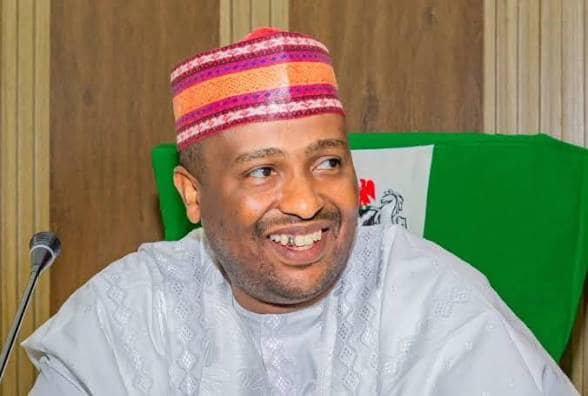
The Bill, sponsored by Senator Ibrahim Dankwambo (PDP, Gombe North), proposes mandatory registration and disclosure requirements for organisations receiving foreign assistance, with sanctions including a minimum fine of N20 million for civil society organisations and private entities, alongside possible suspension or revocation of operating licences.
SERAP Deputy Director, Kolawole Oluwadare, and NGE General Secretary, Mr Onuoha Ukeh, who jointly signed the letter, argued that the proposed law was unnecessary, duplicative and capable of undermining fundamental freedoms.
They said Nigeria already has institutions including the Corporate Affairs Commission (CAC), Economic and Financial Crimes Commission (EFCC), Special Control Unit against Money Laundering (SCUML), Nigerian Financial Intelligence Unit (NFIU) and Federal Inland Revenue Service (FIRS), with statutory responsibilities covering corporate registration, financial reporting, taxation, anti-money laundering and anti-corruption enforcement.
According to them, the Bill failed to demonstrate any regulatory gap that would justify establishing another agency with overlapping and potentially intrusive powers.
At the centre of their objection is the proposed Foreign Aid Regulatory Commission (FARC), which they said would have sweeping powers to register organisations, compel disclosure of information, inspect records, conduct investigations and audits, monitor foreign-funded projects, issue directives, suspend approvals, revoke registrations and impose administrative sanctions.
SERAP and NGE warned that such powers could expose legitimate organisations, particularly independent media and civil society groups, to excessive government supervision and interference.
They argued that the proposed framework could increase governmental leverage over independent organisations, undermine their operational autonomy and create conditions conducive to self-censorship.
The organisations also expressed concern over the Bill’s proposed application to a broad range of entities, including labour unions, professional associations, universities, research institutes, religious and humanitarian organisations, technology hubs and other private entities receiving foreign grants, donations, technical assistance or development funding.
They further faulted what they described as vague provisions relating to “foreign aid,” “national priorities” and “public interest,” arguing that the absence of clear definitions and objective standards could result in arbitrary or selective enforcement.
SERAP and NGE said the Bill’s disclosure requirements would compel recipients of foreign assistance to reveal information including sources, amounts, conditions and implementing partners, with the information potentially published on a proposed National Foreign Aid Register.
They also criticised provisions requiring annual audits and alignment of foreign-funded projects with government-defined national development priorities.
According to the organisations, the combination of mandatory registration, extensive disclosure obligations, intrusive inspection powers, criminal sanctions, substantial fines and possible suspension or revocation of licences amounts to a disproportionate regulatory burden.
They maintained that the proposed legislation could have serious implications for independent journalism because many media and civil society organisations rely on foreign grants to fund investigative journalism, fact-checking, journalist safety, media development and other public-interest activities.
The groups further argued that the Bill was incompatible with Sections 39 and 40 of the Nigerian Constitution, which guarantee freedom of expression and association, as well as Nigeria’s obligations under the African Charter on Human and Peoples’ Rights and the International Covenant on Civil and Political Rights.
They also cited international standards protecting civic space, freedom of association and media freedom, insisting that restrictions on fundamental rights must be lawful, necessary and proportionate in a democratic society.
With Nigeria approaching the 2027 general elections, SERAP and NGE warned that the proposed legislation could further narrow an already shrinking civic space and weaken democratic participation.
They alleged that the suppression of the press in Nigeria has increasingly taken forms including unlawful detention, disappearances, malicious prosecutions and the use of legislation and law enforcement mechanisms against journalists and activists.
The organisations also raised concerns about the use of criminal defamation and cybercrime laws against journalists and activists, strategic lawsuits against public participation, arbitrary arrests and attempts to expand governmental control over civic actors.
They warned that experience from other jurisdictions showed that foreign funding laws could be deployed not merely to promote transparency, but to stigmatise, intimidate and restrict independent civil society organisations and the media.
SERAP and NGE consequently called on the National Assembly to immediately withdraw and reject SB.1034 and publicly commit not to reintroduce legislation that unjustifiably restricts civic space, media freedom or the legitimate activities of civil society organisations and private entities.
They also urged lawmakers to prioritise legislation that promotes transparency, accountability, media freedom and civic participation while creating an enabling environment for independent civil society, religious, humanitarian, media and private organisations.
The organisations further urged the National Assembly to uphold its constitutional responsibility to protect democracy, the rule of law, human rights and fundamental freedoms, particularly ahead of the 2027 general elections.
They warned that if the Bill is passed into law despite the constitutional and human rights concerns raised, SERAP and NGE would consider taking “all appropriate legal action in the public interest” to challenge the legislation and protect freedom of association, media freedom and civic participation.