By: Tijani Salako.
The Managing Director and Chief Executive Officer of the Lagos Waste Management Authority, Muyiwa Gbadegesin, has described waste management as a critical urban governance issue with far-reaching implications for public health, flood control, environmental sustainability, and overall city functionality.
Gbadegesin stressed that effective waste management in Lagos requires shared responsibility among residents, operators, and government.
He spoke at the annual conference of the Property and Environment Writers Association of Nigeria in Lagos, where he addressed the complexities of managing waste in a megacity of over 22 million people. He was represented by the Executive Director of Finance, Kunle Adebiyi.
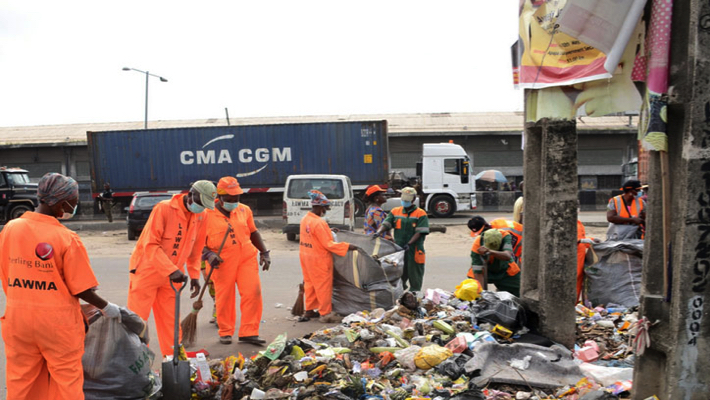
He explained that licensed Private Sector Participant operators handle household waste collection across the state under a structured, area-based system regulated by LAWMA, with over 450 operators currently serving communities.
According to him, the system’s effectiveness depends not only on operational efficiency but also on residents’ cooperation in proper waste disposal and patronage of assigned operators.
Gbadegesin noted that indiscriminate dumping of refuse and the use of illegal cart pushers continue to undermine structured waste management, contributing to blocked drainage and flooding.
He added that as a coastal and highly urbanised city, Lagos must adopt a more disciplined approach, warning that improperly managed waste often ends up in canals, lagoons, and other water bodies.
Beyond waste evacuation, he said the state is promoting sustainable practices such as waste sorting, recycling, and resource recovery, reflecting a shift towards a more efficient and value-driven system.
He emphasised that waste should not be seen solely as a disposal problem but as a potential economic resource when properly managed.
Gbadegesin also highlighted efforts to improve system efficiency through enhanced monitoring, operational interventions, and stronger coordination among PSP operators and other stakeholders.
He further underscored the role of the media in shaping public behaviour, urging journalists to provide context in reporting waste management issues and promote responsible environmental practices.
According to him, achieving a cleaner and more sustainable Lagos will require sustained collaboration among government, operators, communities, and the media.