By: Goodluck E. Adubazi, Abuja.
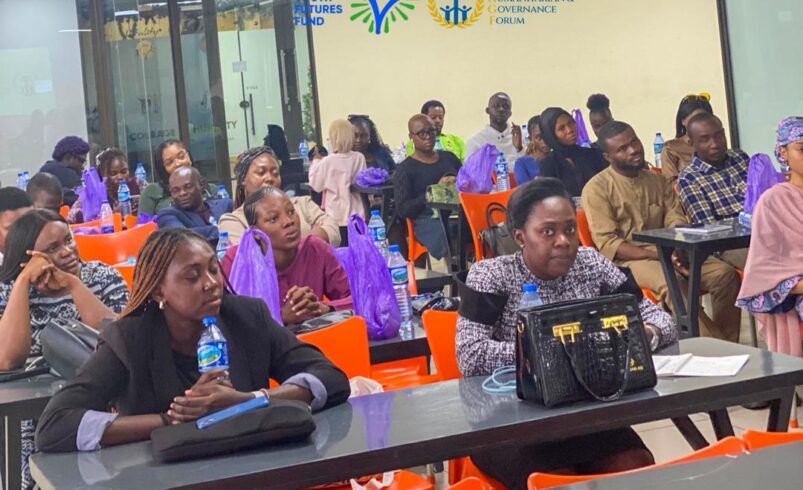
Young Nigerians, legal experts, and civil society leaders gathered this week at the Gavel Humanitarian and Governance Forum (GHGF) with a clear message: understanding gaps in gender laws is no longer enough—action must follow.
The forum, themed “From Mapping to Mobilisation: Youth-Led Strategies for Advancing Gender Law Reform in Nigeria,” brought together youth advocates, policymakers, development partners, and volunteers to chart a new course for gender justice driven by citizen engagement rather than institutions alone.
Bridging the Gap Between Law and Reality
In her welcome address, Glory Chikadibia Eze, Founder and Convener of GHGF, said the forum was born out of frustration with the disconnect between Nigeria’s legal frameworks and the everyday realities of women and vulnerable groups.
“While Nigeria has laws and policies that speak to justice and equality, many people still live outside their protection,” Eze said. “That gap—between what exists on paper and what happens in reality—is where injustice thrives.”
She described GHGF as a deliberate intervention space, designed to ask hard questions, interrogate systems, and bring young people into governance conversations they are often excluded from.
“Governance must respond to human needs, dignity, and lived realities,” she added. “This forum is not just about dialogue; it is a call to action.”
From Knowledge to Collective Action
Eze explained that the theme, From Mapping to Mobilisation, reflects the need to move beyond identifying legal gaps toward coordinated advocacy and reform.
“Mapping helps us see where the problems are—in legislation, implementation, and social attitudes,” she said. “But real change begins when knowledge is transformed into action.”
She urged young Nigerians to see themselves as active reformers—researchers, advocates, professionals, and community organisers—rather than passive observers.
Youth as Drivers of Reform
The keynote address reinforced that message, emphasizing that laws do not change on their own.
“Laws do not reform themselves; people reform laws,” the keynote speaker said, noting that Nigeria still faces discriminatory provisions in marriage, inheritance and labour laws, alongside slow domestication of international frameworks such as the Convention on the Elimination of All Forms of Discrimination Against Women (CEDAW).
Drawing from experiences at TechHerNG, the speaker highlighted the power of youth-led digital mobilisation in reshaping narratives and holding institutions accountable.
“Gender justice is not optional,” the address said. “It is foundational to democracy.”
A Blueprint for Youth-Led Mobilisation
Speakers at the forum outlined what effective youth-led mobilisation should look like, calling for advocacy that is:
Data-driven, to expose gaps and strengthen demands for reform
Inclusive, ensuring rural women, marginalised groups, and persons with disabilities are represented
Digital-first, leveraging technology to amplify voices
Persistent, recognising reform as a long-term struggle
“Young people have the tools, the network,s and the courage to dismantle barriers that have stood for decades,” the keynote speaker told participants. “Do not underestimate the power of your voice. Do not wait for permission to lead.”
Beyond the Forum
As discussions concluded, participants were urged to carry the momentum beyond the event hall—into communities, policy spaces, and sustained advocacy.
“Gender law reform is not just about women,” the keynote address emphasized. “It is about building a Nigeria where justice is not selective, governance is inclusive, and every citizen can thrive.”
For organizers, the forum marked not an end, but a starting point.
“From mapping to mobilisation, from ideas to action,” Eze said, “we can create a Nigeria where gender justice is not a deferred dream, but a lived reality.”