By: Goodluck E. Adubazi, Abuja.
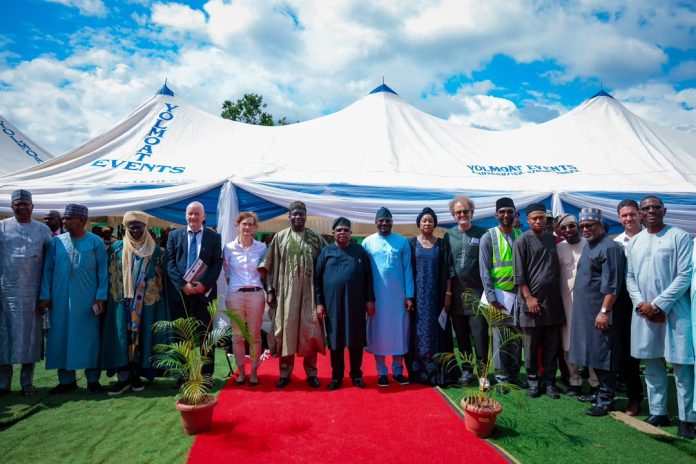
The Raw Materials Research and Development Council (RMRDC), in collaboration with the Federal Ministry of Innovation, Science and Technology, on Tuesday, November 11, 2025, held a high-level dialogue session with members of the diplomatic corps as part of efforts to strengthen Nigeria’s Raw Materials Information System (RMIS) and unveil the 10-Year Strategic Roadmap (2025–2034) for the nation’s raw materials sector.
The one-day event, held at the RMRDC Event Centre in Abuja, attracted representatives of foreign missions, development partners, and key industry stakeholders.
In his opening remarks, the Director-General and Chief Executive Officer of RMRDC, Prof. Nnanyelugo M. Ike-Muonso, described the roadmap as “a transformative framework to unlock Nigeria’s raw materials potential and reposition the sector as the cornerstone of sustainable industrial growth.”
He noted that the roadmap was designed not just as a policy document but as a practical guide to stimulate industrial innovation, enhance local value addition, and foster inclusive national prosperity.
“It is a great honour to welcome our partners from the diplomatic community, whose presence underscores our shared commitment to advancing Nigeria’s industrial development through collaboration and innovation,” Prof. Ike-Muonso stated.
“This 10-year roadmap recognizes that Nigeria’s vast natural endowments must be effectively harnessed to drive industrialization, generate employment, and promote economic diversification,” he added.
According to him, the roadmap outlines strategic actions across 11 key manufacturing sectors, including base metals, chemicals, plastics, food and beverages, electricals, motor vehicle assembly, non-metallic minerals, pulp and paper, textiles, and wood products.
The DG explained that RMRDC’s strategic goals include achieving 30–60% value addition in raw materials processing, developing high-tech laboratories, integrating SMEs into industrial ecosystems, and promoting green technologies for environmental sustainability.
He emphasized that effective implementation would depend on international partnerships in research, innovation, capacity building, and investment.
“We cannot do it alone. The diplomatic community and international partners are invaluable in providing technology, expertise, and funding to make this roadmap a success,” Ike-Muonso concluded.
Earlier, in her welcome address, Mrs. T. A. Giwa-Osagie, who spoke on behalf of RMRDC management and staff, highlighted the roadmap’s development in partnership with the African Development Bank (AfDB).
She described the roadmap as “a strategic framework to reposition Nigeria’s raw materials sector as a key driver of industrial growth, economic diversification, and sustainable development.”
“Today’s dialogue is not just a meeting; it is a call to action — a collective invitation to shape a resilient and globally competitive raw materials sector,” Giwa-Osagie said.
She further stressed the need for shared perspectives and enduring partnerships between Nigeria and the international community to ensure the successful implementation of the roadmap.
In her closing remarks, Dr. Oluremi Elusoji, Deputy Director, Local and International Collaboration Division, RMRDC, expressed appreciation to the diplomatic community and stakeholders for their active participation.
“This roadmap will strengthen research-industry linkages and foster inclusive growth. We deeply appreciate the Ministry of Foreign Affairs for their continued support and commitment to the Council’s vision,” she said.
Dr. Elusoji assured participants that the Council would follow up on all discussions from the session, adding that RMRDC remains committed to deepening collaboration for mutual benefits and sustainable industrial advancement.