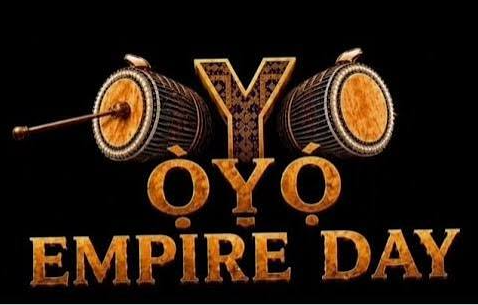
The Central Working Committee (CWC) of the Oyo Empire Day Celebration has announced plans to use the maiden edition of the event to reconnect people of Oyo ancestry across Nigeria and the diaspora with their ancestral roots, while promoting history, culture, scholarship and tourism.
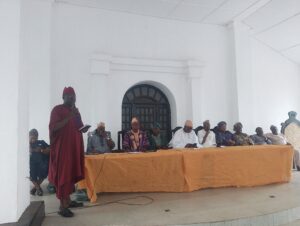
Chairman of the committee, Dr Adekunle Ogunmola, disclosed this on Wednesday, October 7, 2026, during a media chat at the Palace of the Alaafin of Oyo.
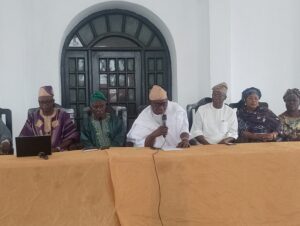
Ogunmola said the celebration was conceived by the Alaafin of Oyo, Oba Abimbola Akeem Owoade, as an annual ancestral homecoming for people whose roots are linked to the historic Oyo Empire.
He stressed that the event was broader than a celebration of the present-day ancient city of Oyo, explaining that the historical empire extended across communities that are now located in different parts of Nigeria and neighbouring countries.
According to him, the celebration is not an Oyo-Atiba festival, but an initiative designed to connect people of Oyo ancestry in places including Kwara, Ogun, Osun, Ondo, Ekiti, Lagos and Kogi states, as well as the Republic of Benin and the wider diaspora.
“Oyo Empire Day is not an Oyo Atiba celebration,” Ogunmola said, adding that the initiative was focused on “historical connections, not imposing identities.”
He said more than 100 ancestral family compounds in the ancient city of Oyo had already been sensitised ahead of the celebration, with plans to help returning descendants identify and reconnect with their ancestral homes.
The chairman said a large identification map showing the locations of ancestral family compounds would also be mounted in front of the palace to assist visitors searching for their roots.
Ogunmola explained that the three-day celebration would feature different activities across Oyo, rather than being restricted to a single venue.
He said the first day would begin with a carnival-like procession from Owode to the Palace of the Alaafin, featuring cultural displays including Gelede, Egungun, Ṣẹ̀kẹrẹ, Dùndún, Bàtá, Ìjálá and horse riding.
The Alaafin is expected to formally declare the celebration open at the palace.
The first day will also feature representations of at least the first five Alaafins in their royal forms, while a replica of Oyo-Ile, the historic capital of the Oyo Empire, will be displayed within the palace complex throughout the celebration.
According to Ogunmola, the second day will focus on history, scholarship, theatre and youth activities, including lectures and colloquia involving scholars and custodians of Oyo history.
He added that Ajagunla, the historical theatre work associated with the late Duro-Ladipo, would also be presented, while a major performance by an international musician of Oyo ancestry would provide entertainment for young participants.
The third day will feature the grand finale at Durbar Stadium, with a royal, cultural, social, family and community parade.
Beyond the main events, the committee said visitors would be exposed to traditional Oyo cuisine, including an Amala pavilion, as well as local Aṣọ Òfì production and other cultural experiences.
Ogunmola said guided heritage excursions would also be organised to Oyo-Igboho and Oyo-Ile, the two historic capitals of the empire.
He said visitors to Oyo-Igboho would see remnants of ancient defensive walls and burial grounds associated with four Alaafins, while excursions to Oyo-Ile would expose participants to locations where remnants and artefacts of the old imperial city remain.
The chairman said the committee intended to expand the heritage-tourism programme in subsequent years to cover other Oyo-related towns, settlements and historical sites.
He stressed that the celebration was not designed merely as an entertainment event, but as a platform for historical research, cultural preservation, education, tourism and economic development.
“Oyo Empire Day is not a political rally. It is non-partisan,” he said, adding that the initiative was also not intended to promote claims of superiority over other Yoruba communities or impose a single interpretation of Oyo history.
Ogunmola said the committee expected an average attendance of about 20,000 people daily during the maiden edition, while expressing confidence that participation would increase in subsequent years as more people discover their ancestral links to Oyo.
He also announced that the Oyo Empire Day Celebration would become an annual event, with future editions scheduled for the third Thursday, Friday and Saturday of December every year.
According to him, fixing the dates would enable residents, visitors, diaspora communities, corporate organisations and other stakeholders to plan for the celebration annually, while the programme itself would be reviewed and improved from year to year.
He said the committee also envisaged the development of permanent heritage institutions, including a proposed Museum of Yoruba Culture and Civilization and an Oyo Empire Day Hall of Fame.
The chairman further noted that the event could generate economic opportunities for hotels, restaurants, transport operators, artisans, farmers, performers, tour operators, photographers and fashion designers.
He therefore urged corporate organisations, traditional institutions, communities, the media, young people and people of Oyo ancestry at home and abroad to support the initiative.
Ogunmola said the ultimate objective was to transform the annual celebration from a three-day event into a sustainable platform for ancestral reconnection, heritage preservation, scholarship, tourism, youth development and economic growth.
He urged people with Oyo ancestry living in different parts of Nigeria and neighbouring countries to take advantage of the celebration to return to Oyo, trace their family roots and reconnect with their ancestral communities.