Professor Akin Alao of the Emmanuel Alayande University of Education, Oyo, has called for the proper documentation and intellectualisation of the historical achievements of the Oyo Empire to make its contributions accessible to the global research community.
Alao made the call on Wednesday, October 7, 2026, during a media chat held at the Palace of the Alaafin of Oyo ahead of the 2026 Oyo Empire Day celebrations scheduled for December 17 to 19.
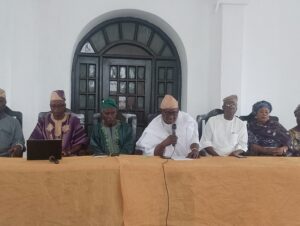
He disclosed that the university recently established Alaafin Institute of Yoruba Studies was working under the Central Committee for the Oyo Empire Day celebrations.
According to him, the institute is positioned to provide an intellectual platform for interdisciplinary research, teaching, documentation and public engagement on the history of the old Oyo Empire.
Alao said the Oyo Empire occupied a pivotal position in the political and intellectual history of West Africa, with its influence built around a strong central authority headed by the Alaafin and supported by councils, chiefs, military institutions, religious authorities and provincial administrative structures.
He said a major highlight of the Oyo Empire Day celebration would be a colloquium scheduled for December 18, the second day of the three-day event, where scholars and other stakeholders would examine the political, social, cultural and intellectual significance of the Oyo Empire.
According to him, the colloquium would examine how Oyo’s central authority contributed to its political ascendancy and expansion, while also exploring the monarchy as an institution that promoted legitimacy, diplomacy, justice, knowledge production and cultural continuity.
He said the forum would also examine the relationship between central authority and institutional restraints within the political system of the Oyo Empire, noting that the historical arrangement provided an important framework for understanding the distribution and limitation of political power.
Alao explained that the colloquium would provide a scholarly and public platform for examining the place of the Oyo Empire in African history and civilisation, as well as the continued relevance of traditional institutions to cultural preservation, education, historical consciousness and governance.
He listed the objectives of the proposed colloquium to include examining the historical development, political organisation and civilisational achievements of the Oyo Empire; recognising the role of the monarchy in its political, social, cultural and intellectual development; and exploring how its central authority facilitated political ascendancy and influence beyond its immediate territory.
The don also called for the preservation, digitisation and translation of Oyo history, language, culture and indigenous knowledge, stressing the need to make the wealth of knowledge accessible to researchers and the wider global community.
He said the Oyo Empire Day celebration would provide an opportunity to properly situate the age-long achievements of the empire, relate them to contemporary realities and further develop them into scholarly resources capable of contributing to global intellectual development.
“What are we doing to properly intellectualise these achievements, what we have as the heritage of our land, and how can we make it available to the wider society, especially the research community all over the world?” Alao asked.
He added that sustained research was needed to draw greater attention to the contributions of the Oyo Empire to human development and humanity, stressing that the effort would help preserve the historical legacy of the empire and promote its recognition as part of the broader body of global knowledge.