By: Goodluck E.Adubazi, Abuja.
The Midstream and Downstream Gas Infrastructure Fund (MDGIF) has disclosed that it has leveraged its N671 billion public fund to attract N1.6 trillion in private capital for investments in Nigeria’s midstream and downstream gas infrastructure.
The Fund said the mobilisation of private capital, representing approximately 2.4 times its public capital, was part of the core objective of the Petroleum Industry Act (PIA) to de-risk infrastructure projects, make them bankable and crowd in private investment.
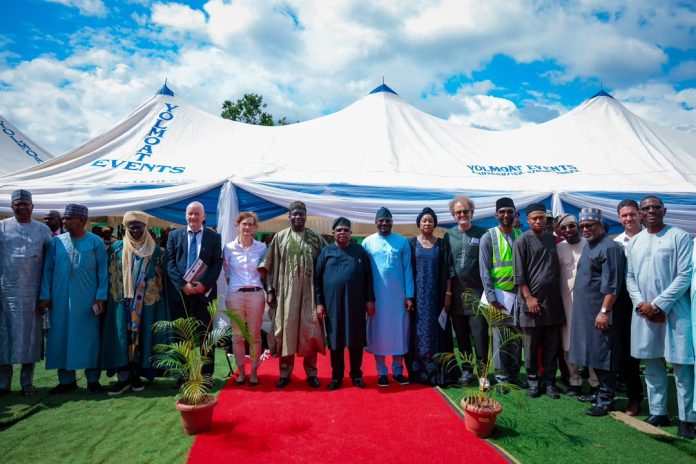
The Executive Director of MDGIF, represented by the Director, Strategy, Research and Deal Origination, Engr. Elvis Duruji, disclosed this on Thursday, September 24, 2026, in Abuja at the 2026 conference of the Association of Energy Correspondents of Abuja FCT (AECAF).
The conference was themed “Sustaining Oil and Gas Investment in Nigeria Amid Energy Transition.”
Delivering the keynote address titled “De-Risking Domestic Gas Infrastructure: The Missing Link to Private Investment,” Duruji said the Fund was created as a public investment platform to bridge the gap between available capital and bankable gas infrastructure projects.
He said the Fund was not designed simply to inject money into projects but to identify and manage the risks preventing private investors and development finance institutions from committing capital.
“We have been able to use our N671 billion to attract capital investors of N1.6 trillion. So, this is actually the whole objective of the PIA.”
Duruji said MDGIF was deliberately positioned as a catalyst for private investment, noting that it was established under Section 52 of the PIA to de-risk projects and optimise national assets.
According to him, the Fund identifies regulatory, political, technical and commercial risks and works to reduce them to levels that can make projects attractive to investors.
He said MDGIF viewed risk as an opportunity, adding that some projects that might not initially appear financially viable could become bankable when their strategic national importance and associated risks were properly assessed and managed.
Duruji disclosed that MDGIF had entered into about 30 partnerships, with its interventions covering 205 infrastructure projects across the country.
He said the projects, if fully operational, could deliver approximately 475 million standard cubic feet of gas per day to the domestic market.
According to him, the projected output represents about 25 per cent of the estimated 1.9 billion standard cubic feet of gas currently supplied to the domestic market.
He said increasing domestic gas consumption was one of the Fund’s key mandates under the PIA.
The MDGIF official also identified crowding in private capital and reducing gas flaring as other major components of the Fund’s mandate.
He said MDGIF had used its own resources to mobilise about 2.4 times the private counterpart funding, thereby creating a platform for additional investors to participate in gas infrastructure development
Duruji said the Fund had partnered with four flare-out projects capable of monetising approximately 444 million standard cubic feet of gas per day that would otherwise have been flared.
He said the projects could also eliminate about 2,845 metric tonnes of gas emissions per day, contributing to efforts to reduce the environmental impact of gas flaring.
He described the projects as evidence of the Fund’s efforts to deploy public capital to unlock private investment while supporting the country’s domestic gas and environmental objectives.
Duruji identified high capital requirements, infrastructure gaps, fragmentation, regulatory uncertainties, political risks, technical challenges and commercial risks as some of the factors affecting investment in Nigeria’s midstream and downstream gas infrastructure.
He said investors were often confronted with substantial uncertainties despite the country’s significant gas resources.
He noted that Nigeria’s large gas reserves would only translate into economic value if adequate infrastructure was developed to bring the gas to markets and industries.
According to him, the strategic positioning of MDGIF within the NMDPRA framework enables the Fund to better understand regulatory issues affecting midstream and downstream gas infrastructure and incorporate risk management into its investment decisions.
The MDGIF representative said the Fund operates an investment policy statement that establishes the requirements and standards projects must meet before consideration.
He said proposed investments undergo economic value assessment, technical feasibility checks, commercial and funding assessments, and sustainability analysis.
Among the issues examined, he said, are the project’s potential for revenue generation, job creation, GDP contribution, industrial development, gas utilisation, energy security and alignment with national development objectives.
Projects are also expected to satisfy relevant licensing and environmental requirements, including evidence of environmental assessment processes where applicable.
Duruji said projects undergo proposal submission, preliminary evaluation, screening and due diligence before final investment decisions are taken by the governing council.
He explained that the separate governing council also serves as a mechanism for managing potential conflicts of interest between regulatory responsibilities and investment decisions.
On geographical expansion, Duruji said MDGIF was working to develop gas infrastructure across different regions of Nigeria.
He described the North-Central as a potential network bridge where gas markets are emerging but infrastructure connections remain inadequate.
He said the priority was to accelerate transmission and distribution corridors and develop urban and industrial demand.
For the North-West and North-East, he said the Fund was focusing on strengthening gas transportation networks, developing distribution systems and connecting regional population and market centres.
He said CNG, LNG, trucks and other virtual pipeline systems would continue to support gas distribution while the ultimate objective remained the development of a comprehensive pipeline distribution network.
Duruji disclosed that MDGIF had established an equipment leasing structure to support the development of high-capacity CNG stations.
He said the arrangement was designed to ease the capital burden on operators by allowing them to access equipment under leasing arrangements and repay over agreed periods.
He also disclosed that the Fund had supported CNG projects in different parts of the country.
According to him, 20 CNG stations were selected under one of the intervention programmes, with three already commissioned and another 14 expected to be commissioned within the next two to three months.
He added that four other projects had been commissioned in Lagos, while projects were also ongoing in Abuja.
Duruji identified a five-million-standard-cubic-feet-per-day mini-LNG project in Delta State as one of the Fund’s flagship projects.
He said the project had previously spent years seeking funding before MDGIF’s intervention, adding that it was expected to be commissioned within the next two to three months.
He said the project demonstrated how de-risking could transform a project that had struggled to attract institutional capital into an operational infrastructure investment.
“The portfolio is moving beyond approval. Assets are being fabricated, installed and commissioned. The clearance of risk and translating capital into real gas infrastructure is what we are already doing,” he said.
Duruji returned to the Fund’s capital mobilisation achievement, stressing that MDGIF had used its public capital to attract a much larger pool of private investment.
He said the N671 billion public fund had helped attract about N1.6 trillion in private capital, representing an estimated 2.4x multiplier.
He said the objective was to ensure that public funds served as a catalyst rather than a substitute for private capital.
According to him, MDGIF currently has 31 projects across different regions, 205 infrastructure projects, 127 autonomous projects and 10 commissioned projects, while the Fund has also partnered with numerous private-sector participants.
He said the Fund’s approach was based on the understanding that capital would follow projects where risks were clearly identified, allocated and progressively reduced.
“There is capital available. But it follows projects where risks are understood, allocated and progressively reduced,” he said.
He added that MDGIF relied on due diligence, risk governance, milestone controls and patient equity capital to address supply, permitting and execution risks.
In his special address titled “Unlocking Gas Investment for Domestic Growth and Energy Security,” the Minister of State for Petroleum Resources (Gas), Rt. Hon. Ekperikpe Ekpo, represented by Mr. Abel, called for a balanced, practical and investment-friendly energy transition that protects Nigeria’s economic interests while meeting its climate and development obligations.
Speaking at the Association of Energy Correspondents of Abuja FCT (AECAF) conference in Abuja, themed “Sustaining Oil and Gas Investment in Nigeria Amid Energy Transition,” Ekpo said Nigeria must strengthen investor confidence, improve regulatory certainty, deepen local content and reduce operational challenges. He stressed that the country’s abundant gas resources must be leveraged to drive industrialisation, job creation, infrastructure development and improved living standards, while describing natural gas as a key transition fuel and enabler of industrialisation.
The Minister said the Federal Government’s implementation of the Petroleum Industry Act (PIA) 2021 and ongoing reforms were aimed at creating greater certainty for investors, while projects such as the Ajaokuta-Kaduna-Kano (AKK) gas pipeline, LNG, LPG and CNG initiatives would help expand access to affordable and cleaner energy.
He called for greater efficiency in the sector by addressing infrastructure constraints, security challenges, operational inefficiencies, contracting delays and regulatory bottlenecks. Ekpo also commended the media for its role in reporting the complex petroleum industry, urging energy correspondents to provide accurate context and balanced analysis that would help build public understanding and investor confidence.
He said the government’s objective remained to build a competitive and investment-friendly petroleum industry capable of delivering tangible benefits to Nigerians while progressively diversifying the country’s energy mix.
The conference also featured the participation of the Nigerian Upstream Petroleum Regulatory Commission (NUPRC), with the commission’s position that Nigeria remains an investment destination for global energy investors forming part of the discussions.
The NUPRC perspective added an upstream dimension to the conference’s broader focus on sustaining investment across Nigeria’s oil and gas value chain.
Earlier, the Chairman of AECAF Abuja FCT, Mr. John, said the conference was designed to examine how Nigeria could sustain investment in the oil and gas industry amid the global energy transition.
Reflecting on his more than two decades of reporting on the sector, he said investment had historically been vulnerable to adverse policies and changing global economic conditions.
He recalled that the industry had experienced several disruptions, including global oil price shocks, the COVID-19 pandemic and geopolitical tensions, while the energy transition had also affected investment flows into oil and gas.
According to him, the conference theme was therefore designed to provoke discussions on how Nigeria could retain and renew investors’ confidence as companies and countries increasingly shifted their attention towards cleaner energy.
He noted that the global drive towards net-zero emissions by 2050 had contributed to divestments from oil and gas assets, including Nigeria’s onshore sector.
However, he said subsequent global developments had continued to demonstrate the importance of hydrocarbons to energy security.
He cited the Russia-Ukraine war and other geopolitical tensions as developments that had affected global energy markets and brought renewed attention to oil and gas-producing countries.
He also referenced the conflict involving the United States, Israel and Iran and the resulting concerns around the Strait of Hormuz, saying such developments had reinforced the continuing relevance of hydrocarbons in global energy security.
The AECAF chairman said the global conversation appeared to be moving towards an energy-mix approach, with oil and gas continuing to play a role alongside renewable energy.
He said Nigeria had witnessed renewed interest in its hydrocarbon industry, including developments around refineries, petrochemicals and upstream investment.
The AECAF chairman urged Nigeria to sustain implementation of the Petroleum Industry Act, which he identified as an important framework for improving investment in the sector.
He also identified security as a major factor in attracting and retaining investors.
According to him, the Niger Delta and other oil-producing areas must remain sufficiently secure to protect existing investments and encourage fresh capital inflows.
He further called for stable and predictable policies, stressing that investors needed an enduring regulatory environment before committing long-term capital.
“Nigeria can only sustain investors’ confidence with enduring and stable policies,” he said.
He expressed appreciation to partners and members of the association for supporting the conference and commended the conference planning committee for its efforts.
The 2026 AECAF conference brought together stakeholders from the upstream, midstream and downstream segments of the petroleum industry to examine investment opportunities, infrastructure gaps, energy transition, regulation, security and the policy environment affecting the sector.