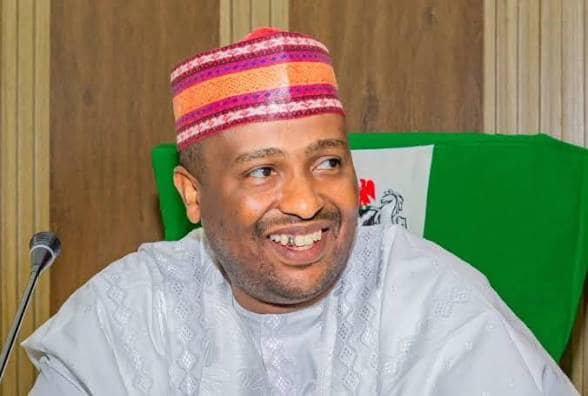
By: Goodluck E.Adubazi, Abuja.
The Minister of Finance and Coordinating Minister of the Economy, Mr. Taiwo Oyedele, has said that an approved budget represents a promise made by the government. In contrast, a successfully implemented budget amounts to a promise kept.
The Honourable Minister of finance and coordinating Minister of the Economy Taiwo Oyedele stated this on Thursday in Abuja while speaking at the International Budget Partnership (IBP) Nigeria PULSE Summit 2026, held under the theme, “Public Finance: Unlocking Last-Mile Services.”
The minister said the real test of public financial management was not merely the approval of budgetary allocations or release of funds, but whether such resources ultimately translated into tangible improvements in the lives of Nigerians.
According to him, “an approved budget is a document” containing figures signed into law, but its true value can only be determined by what citizens receive from those allocations.
He cited the need for functional primary healthcare centres, teachers in classrooms, access to markets for farmers, safe drinking water and effective social protection as examples of the outcomes citizens expect from government budgets.
The Hon. Minister of Finance Taiwo Oyedele said Nigeria had made progress in budget preparation, classification and open data, but stressed that the country must now focus more intensely on the gap between budget approval and actual delivery.
“Approval is upstream, delivery is downstream. And the distance between the two, that is the last mile, is where most of the value of public money is actually won or lost,” he said.
The minister identified three major challenges undermining effective public finance management in the country, including fiscal constraints, weak systems for transferring funds to implementing agencies and communities, and inadequate accountability mechanisms.
He explained that revenue performance often failed to match projections, resulting in adjustments that disproportionately affected capital expenditure and service-delivery programmes.
Oyedele also noted that even when funding was available, procurement delays, fragmented systems and varying implementation capacities at the sub national level could prevent funds from reaching their intended beneficiaries.
“A naira approved in Abuja for a state capital and a naira that reaches the primary health centre in the rural wards are not the same naira,” he said, stressing the need to strengthen the institutional bridge between budget allocation and actual service delivery.
On accountability, the minister said citizens must be able to track what the government had promised, what had been funded and what had actually been delivered.
“Whatever is not tracked is in reality unlikely to be achieved and may not even exist,” he warned.
Oyedele also defended key economic reforms undertaken by the President Bola Ahmed Tinubu administration, particularly the removal of fuel subsidy and the unification of the foreign exchange market.
He said the reforms, although difficult in the short term, were necessary to correct distortions that had constrained the economy and diverted resources away from critical sectors.
According to him, the fiscal space created by the reforms was now being directed towards sectors including health, education, water and social protection.
The minister, however, cautioned that creating fiscal space was only the beginning, stressing that institutional and accountability mechanisms must be strengthened to ensure that public resources produce measurable outcomes.
He described this as the “federation of shared prosperity,” arguing that economic stability should be driven at the federal level, while shared prosperity should be achieved in the states and improved living standards delivered at the local government level.
“That is not a division of convenience. It is a division of responsibility,” he said.
The Minister urged federal, state and local governments to recognise their respective responsibilities in delivering services to citizens, insisting that no level of government should shift blame to another.
He commended the design of the PULSE Summit, particularly its use of policy labs covering health, education, water, sanitation and hygiene, social protection and debt.
Unlike conventional conference panels, he said, the labs should produce specific, costed and measurable commitments showing who will do what, by when, at what cost and against which indicators.
He also welcomed the summit’s reform tracker, describing it as an important accountability mechanism for publishing and monitoring commitments made during the summit.
Oyedele called on government officials attending the summit to treat every commitment made in the policy labs as a budget line — “costed, owned and reported.”
He assured participants that the Ministry of Finance would engage with the reform tracker while urging civil society organisations and development partners to hold the government accountable for its commitments.
The minister said the success of the government should not be measured merely by increased budgetary allocations or improved macroeconomic indicators.“Success should not be a bigger budget line.
Rather, it should be a functioning clinic, a qualified teacher present in a well-resourced school, a tap that runs, a payment that reaches a vulnerable household on schedule, and a community that feels the presence of government in their daily lives,” he said.
“Ultimately, the budget approved is a promise made. A budget delivered is a promise kept.” The Finance Minister said.
Earlier, the Country Director of IBP Nigeria, Olayinka Babalola, said Nigeria must close the gap between improving macroeconomic indicators and the everyday experiences of citizens.
Babalola said although Nigeria had recorded improvements in indicators such as economic growth, inflation and foreign reserves, these gains had not sufficiently translated into better public services at the grassroots.
She said the core question addressed by the summit was how revenues collected, loans borrowed and budgets implemented could deliver quality and affordable services to citizens at the last mile.
According to her, “the last mile is actually where policy meets reality, where budgets become services, and where citizens experience government directly.”
Babalola called for greater consultation with citizens on how public resources are spent, particularly at the state and local government levels.
She said governments were appointed to manage public resources on behalf of citizens and must therefore remain accountable to them.
She also criticised unrealistic revenue and expenditure projections, warning that repeated failure to meet budget targets could erode public confidence in fiscal data and government budgets.
The IBP Nigeria Country Director further called for public finance information to be made accessible to ordinary Nigerians through simplified citizens’ guides and local languages.
She urged stronger independent oversight of public finances involving the Auditor-General, National and State Assemblies, local councils, civil society organisations, community representatives and the media.
Babalola also demanded real and immediate consequences for financial mismanagement, saying oversight would have little meaning if identified infractions produced no sanctions.
She advocated the use of both official government data and citizen-generated evidence in public finance decisions, arguing that quantitative figures must be complemented by the lived experiences of Nigerians.
She said the success of the PULSE Summit would ultimately be measured by whether its policy labs produced practical solutions to the bottlenecks preventing public funds from reaching citizens.
Babalola said the summit’s reform tracker would continue monitoring commitments beyond the event, ensuring that the gathering would not become another conference where discussions end without implementation.
She urged stakeholders to use the summit to strengthen collaboration and ensure that public finance works for all Nigerians, particularly vulnerable and marginalised communities.