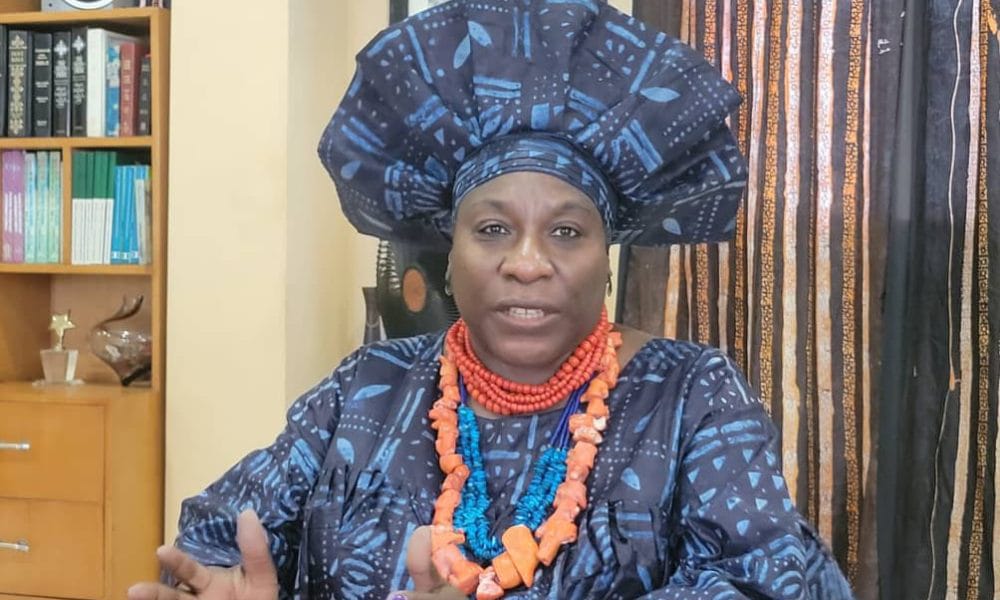
The Executive Director of the Wole Soyinka Centre for Investigative Journalism (WSCIJ), Motunrayo Alaka, has urged local newsroom leaders to prioritize identity, ethical leadership, strategic partnerships and public trust as the foundation for building sustainable media organisations.
Alaka gave the charge during the Collaborative Media Engagement for Development, Inclusivity and Accountability (CMEDIA) Masterclass for Local Journalism Editors on Sustaining Impact through Funding, Partnerships and Newsroom Resilience, organised by the WSCIJ.
Speaking on lessons from the CMEDIA project, she acknowledged that funding remains essential to newsroom growth but stressed that financial support alone cannot guarantee long-term success.
According to her, organisations that lack a clear identity, sound governance, innovation and ethical leadership may receive funding but struggle to make lasting contributions to public interest journalism.
“Funding is critical and very important, but if you lack identity, ethics, leadership, governance, good partnerships and innovation, you may have funding without creating the kind of legacy that stands the test of time,” she said.
Highlighting the impact of the CMEDIA initiative, Alaka disclosed that the five-year project, launched in 2021, directly supported 26 media organisations, trained nearly 3,790 journalists and more than 1,000 journalism students, while facilitating 844 grassroots investigative reports across Nigeria.
She said the project amplified stories often overlooked by mainstream media, including reports from underserved communities, persons with disabilities, women, young people and conflict-prone areas such as the Lake Chad region.
According to her, the investigative reports reached more than 30 million people, strengthened local journalism ecosystems and contributed significantly to expanding accountability journalism in Nigeria.
She cited several impactful investigations supported through the initiative, including Daily Nigerian’s investigation into certificate racketeering in the Benin Republic, which prompted the Federal Government to suspend accreditation of several foreign universities, as well as the Foundation for Investigative Journalism’s “Arrows of God” series, which exposed illegal baby trafficking in orphanages and led to the closure of one of the facilities involved.
Alaka revealed that the project recorded over 50 direct policy and social impacts, demonstrating how investigative journalism can influence governance and improve citizens’ lives.
She identified identity, vision and purpose as the most important ingredients for newsroom sustainability, urging media owners to clearly define the problems their organisations seek to solve.
“Your name is a promise. What you do afterwards determines whether you fulfil that promise or not,” she said, explaining that every newsroom should regularly evaluate whether its work aligns with its stated mission.
The WSCIJ Executive Director criticised the growing trend of news aggregation without originality, warning that platforms that merely copy other organisations’ content without proper attribution risk losing credibility.
“If you choose to be an aggregator, understand that identity and operate professionally. Give proper credit, obtain necessary permissions and understand the legal implications. Don’t pretend aggregated content is original journalism,” she advised.
She also encouraged smaller media organisations to embrace niche reporting instead of attempting to compete with larger newsrooms across every beat.
According to her, specialised reporting in areas such as law, agriculture, sports, education or women-focused issues offers greater opportunities to build loyal audiences and attract sustainable support.
Alaka further called on editors to invest in leadership structures, financial accountability and corporate governance, noting that many emerging media organisations still operate without proper institutional systems.
She explained that several organisations supported under CMEDIA initially lacked separate corporate bank accounts and governance structures, prompting WSCIJ to assist them in strengthening their administrative systems alongside editorial capacity.
“We ask government to be accountable, but journalists must also embrace accountability within their own organisations,” she said.
She stressed that editorial excellence and public trust remain the media’s greatest assets, warning against sacrificing quality for speed in the age of artificial intelligence and digital publishing.
Alaka also encouraged newsroom leaders to build strong relationships with their audiences and develop strategic partnerships beyond financial support.
According to her, valuable partnerships can provide knowledge, expertise, wider networks and collaborative opportunities that ultimately strengthen journalism’s role in promoting transparency, accountability and national development.
She concluded by urging media practitioners to see themselves not only as competitors but also as collaborators working together to advance the public interest and strengthen Nigeria’s democratic landscape.