By: Yinka Kareem.
On Thursday, April 23, 2026, the words of Chief Olusegun Obasanjo took on new life at the June 12 Cultural Centre, as more than 50 pupils from primary and secondary schools, aged 9 to 13, gathered for the Children’s Holiday Traditional Sports and Games Competition. The event, organized by Kotonnbo Ventures, aimed to promote, showcase, and preserve Yoruba traditional sports and games.
In the foreword to the Second Black and African Festival of Arts and Culture (Lagos, January 15 – February 12, 1977), and the Colloquium on Black Civilization and Education (Lagos, January 17 – 31, 1977), Colloquium Proceedings, Volume 1, Chief Olusegun Obasanjo — then Head of the Federal Military Government and Commander-in-Chief of the Armed Forces of the Federal Republic of Nigeria — declared that:
“In my opening address to the Colloquium on 17th January, 1977, I made it clear that the spotlight on the past must be related to our present conditions and aspirations. I also emphasised that an assessment of our contribution to human knowledge and civilization be seen as the first step in process of mental liberation.
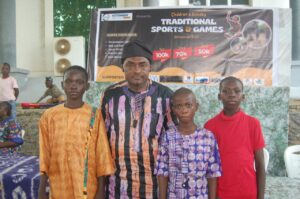
Yet, his words found renewed expression during the competition, which showcased five revitalized and standardized Yoruba traditional sports and games: Knucklebones (Ege), Hide and Seek (Onide), Spear Throwing (Oko Siso), Skittles (A-gba-wole), and Bata Dancing (Jijo Bata). The modernization and standardization of these games reflect Chief Olusegun Obasanjo’s 1977 call that “the spotlight on the past must be related to our present conditions and aspirations.” This event was not merely a revival of Yoruba traditional play, but a deliberate effort to present these cultural sports in updated forms that align with contemporary realities and the broader aspirations of modernization and progress.
Baba Obasanjo’s words also found renewed meaning during the competition, especially when one recalls his long standing assertion that “…an assessment of our contribution to human knowledge and civilization [must] be seen as the first step in the process of mental liberation.” It is undeniable that colonial influence has led many to abandon indigenous sports and games in favour of those introduced by colonial powers. Yet, the five featured contests in this event were deliberately designed to foster mental liberation, affirming that Yoruba traditional sports and games stand on equal footing with foreign ones and are by no means inferior.
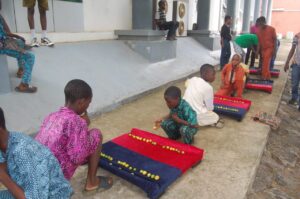
What many once saw as “local” Yoruba games are, in truth, part of a global heritage. Take Ege, for example—though some children found it difficult during the competition, it mirrors Korea’s Gonggi, the ancient Egyptian and Greek Knucklebones, and Haiti’s Osselets. Watching today’s children embrace these revitalized versions is more than play; it’s a journey toward freeing the mind and realizing that no culture stands above another. This celebration of tradition was made possible by the generosity of friends, families, associates, and corporate sponsors, who helped breathe new life into the vision Chief Olusegun Obasanjo voiced so many years ago.
Yinka Kareem who updated these sports and games writes from Abeokuta, Ogun State.