By: Goodluck E.Adubazi, Abuja.
The Permanent Secretary of the Ministry of Interior, Dr. Magdalene Ajani, has called for collective national commitment to reform Nigeria’s correctional system, stressing that sustainable nation-building requires honesty, responsibility, and prioritising national interest above all else.
Ajani made the remarks on Wednesday in Abuja while closing a two-day stakeholders’ engagement held from March 24 to 25 at the Transcorp Hilton.
The meeting focused on the presentation of the report of the Independent Investigative Panel on alleged corruption, abuse of power, and other violations within the Nigeria Correctional Service.
She urged state correctional service to begin making dedicated budgetary provisions for correctional services from 2027, noting that such “vault charges” would ensure better collaboration, focus, and funding support at the subnational level.
“National building demands that we confront challenges honestly and respond responsibly. It demands placing national interest above personal and sectional convenience,” Ajani said, adding that the reform process provides an opportunity to strengthen transparency and institutional integrity.
The Permanent Secretary emphasised that reform efforts are not aimed at weakening institutions but improving truth, accountability, and public trust.
According to her, the Independent Investigative Panel, inaugurated on September 30, 2024, conducted its work with transparency and objectivity, examining allegations fairly while identifying systemic gaps and proposing practical reforms.
Ajani further stressed that meaningful reform cannot be achieved by government alone, calling for collaboration among the correctional service, civil society, and other stakeholders.
“We are moving firmly on the path of implementing the panel’s findings across the correctional service and the wider criminal justice system,” she said, noting that the issues examined touch on public trust, institutional accountability, and the protection of human dignity.
The panel included Dr. Uju Agomoh as secretary, alongside consultant Iyke Ezeugo and other members.
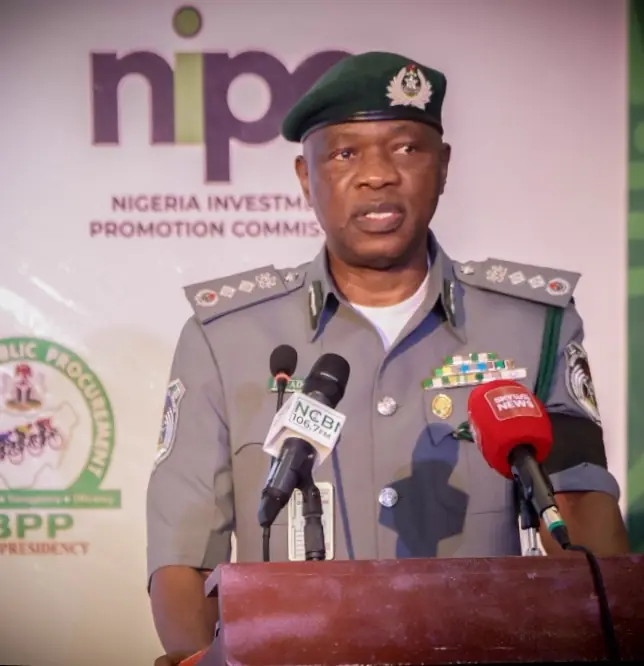
In his institutional statement remarks, the Controller-General of the Nigeria Correctional Service, Sylvester Ndidi, commended the panel’s diligence and described the process as necessary and significant.
Ndidi acknowledged that the report addressed serious concerns, including allegations of misconduct, abuse of authority, poor custodial conditions, and broader systemic challenges affecting service delivery.
He noted that while these issues are critical, they must also be understood within the operational realities of the correctional system, such as overcrowding, infrastructure deficits, and limited resources.
He reiterated that the service does not condone misconduct and assured that all substantiated cases would be handled in line with due process and established disciplinary procedures.
“The vast majority of our personnel continue to serve with professionalism and dedication, often under very challenging conditions,” he said.
Ndidi outlined key reform priorities, including strengthening internal oversight mechanisms, improving complaint channels, enhancing supervision, and investing in infrastructure, staff welfare, and technology. He also highlighted the need for broader justice sector collaboration, particularly in addressing pre-trial detention and promoting non-custodial sentencing.
As the engagement concluded, Ajani expressed optimism that the outcome would strengthen institutions, deepen public trust, and advance justice and accountability in Nigeria’s correctional system.