By: Goodluck E. Adubazi, Abuja.
The Hon. Minister of Aviation and Aerospace department, Festus Keyamo on Tuesday unveiled Nigeria’s 2026 Seasonal Climate Prediction (SCP), with the Nigerian Meteorological Agency (NiMet) forecasting early onset of rainfall in several southern and central states, longer-than-normal rainy seasons in major population centres, and severe dry spells in parts of the country.
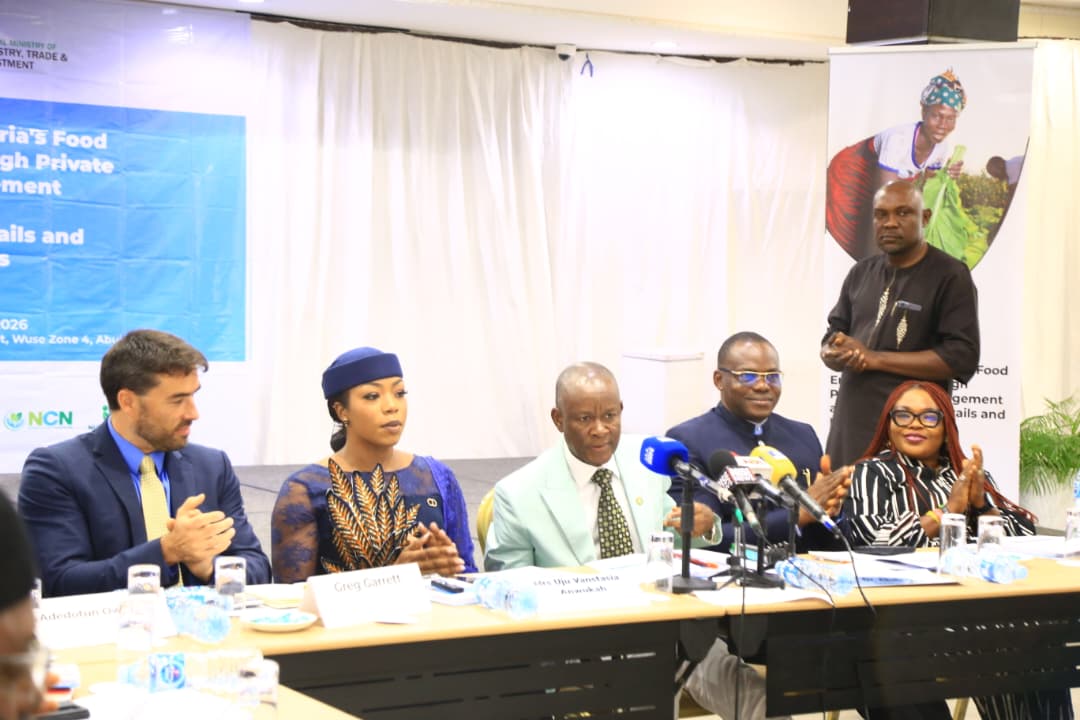
The SCP was officially presented by the Honourable Minister of Aviation and Aerospace Development, Mr. Festus Keyamo, SAN, at the NAF Conference Centre, Abuja, as NiMet marked 140 years of meteorological service and 23 years as an agency.
According to NiMet, early rainfall onset is expected in Bayelsa, Rivers, Akwa Ibom, Cross River, Benue, Kogi, Nasarawa, Oyo, and parts of Kebbi, Niger, Jigawa, Katsina, Kano, Adamawa and Taraba States. However, the agency warned that rainfall cessation may occur earlier than normal in parts of Ogun, Osun, Ondo, Imo, Rivers, Akwa Ibom, Kogi and Niger States.
Longer and Shorter Rainy Seasons
NiMet projects a longer-than-normal rainy season in Lagos, Benue, Enugu, Ebonyi, Ogun, Oyo, Nasarawa, Anambra, Kwara, Kebbi, Kaduna, Gombe and Taraba States, while Borno, Yobe and Niger States are expected to experience a shorter rainy season.
Annual rainfall is predicted to be near normal across most of Nigeria, with above-normal rainfall expected in Borno, Sokoto, Kebbi, Kaduna, Enugu, Cross River, Abia, Ebonyi, Akwa Ibom States and the Federal Capital Territory. In contrast, below-normal rainfall is anticipated in parts of Katsina, Zamfara, Kwara, Oyo and Ogun States.
On Dry Spells and August Break,
NiMet warned of severe dry spells exceeding 15 days between March and May in Oyo and Ogun States, while moderate dry spells are expected across Ekiti, Kogi, Osun, Ondo, Edo, Ebonyi, Abia, Cross River and Delta States.
During the June–July–August period, dry spells lasting up to 21 days are forecast for parts of Bauchi, Borno, Gombe, Jigawa, Katsina, Kano, Kebbi, Kwara, Nasarawa, Niger, Oyo, Plateau, Sokoto, Yobe and Zamfara States.
The Little Dry Season (August Break) is predicted to begin by late July, becoming severe and prolonged in Lagos, Ogun, Ekiti and parts of Oyo, with 28 to 40 days of little or no rainfall. A moderate effect is expected in Ondo, parts of Kwara and Edo States.
NiMet also forecasts warmer-than-average daytime and nighttime temperatures across most parts of the country between January and May 2026.
Speaking at the SCP 2026, Mr. Keyamo cautioned farmers and stakeholders against mistaking early rains for the full commencement of the rainy season.
“We have already seen significant rains in parts of southern Nigeria, but these should not be taken to mean that the rainy season has fully started,” he said, urging rain-fed farmers to rely on NiMet’s predicted onset dates.
The Minister noted that the 2026 SCP was developed using global best practices, incorporating El Niño–Southern Oscillation (ENSO) and the Indian Ocean Dipole (IOD), both of which currently indicate a neutral ENSO phase.
“This scientific robustness ensures that the SCP remains a trusted national reference for policy formulation, investment planning and risk management,” Keyamo stated.
He reaffirmed the Federal Government’s commitment to strengthening NiMet, describing climate science as “fundamental to sustainable development” and essential to aviation safety, agriculture, disaster risk reduction and economic planning.
NiMet DG Calls for Stronger Partnerships
Earlier, Director General of NiMet, Prof. Charles Anosike, said the agency remains committed to providing authoritative, science-based climate information amid increasing climate variability and extreme weather events.
He disclosed that NiMet has established a specialised team to integrate Artificial Intelligence into weather forecasting, while calling on state governments and partners to collaborate in downscaling the SCP to local communities, particularly farmers.
“As climate risks intensify, timely and reliable weather information is no longer optional—it is indispensable,” Anosike said.
The unveiling of the 2026 SCP, officials said, aligns with the Federal Government’s push for science-driven decision-making, positioning climate intelligence as a key tool for national resilience and sustainable development.