In most security formations across Ọ̀yọ́, A wooden bench here, a plastic chair there, a corner squeezed between files and duty rosters, what is missing is not a place to sit, but insufficiency of site. There’s not enough site for officers on long shifts, enough comfort for citizens waiting to be attended to, and enough dignity for institutions that serve daily under pressure.
It is within this often-ignored gap that the Ayo-Sanda Ladigbolu Foundation (TASLAF) quietly stepped in.
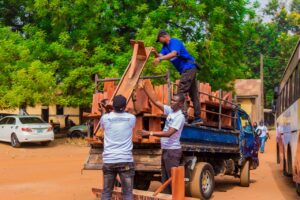
On January 12, 2026, TASLAF rolled out its first intervention of the year, the Bench of Honour Project, not as a symbolic gesture, but as a practical response to a lived reality inside security offices across Ọ̀yọ́ town.
The project did not assume absence. It recognised insufficiency. And it responded with intent.
Through the donation of 50 benches, TASLAF sought to ease daily strain, reduce congestion, and improve welfare conditions for officers and the citizens who interact with them, often after hours of waiting, questioning, or reporting distress.
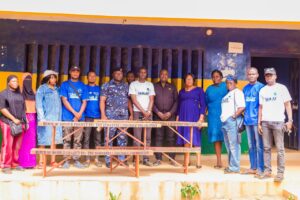
From police stations to road safety offices and enforcement units, the message was consistent: service continues regardless of comfort, but dignity should not be optional.
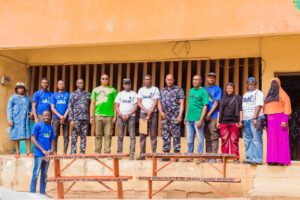
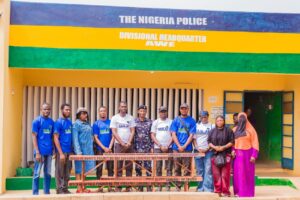
The first phase of the project reached the Nigeria Police Force, Ọ̀yọ́ Area Command, including divisional police offices (DPO) at Durbar, Atiba, Ilora, Ojongbodu, Jobele, and Awe, as well as the Police Monitoring Unit, Oyo Area Command.
Beyond the police, TASLAF extended the intervention to the Federal Road Safety Commission (FRSC), Ọ̀yọ́; the Ọ̀yọ́ State Road and Transport Management Agency (OYRTMA), Ọ̀yọ́ Zone; and the National Drug Law Enforcement Agency (NDLEA), Ọ̀yọ́ Area Command.
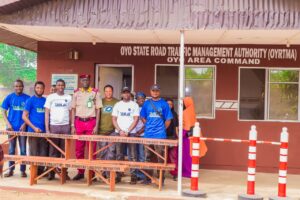
At each location, the reaction was not casual politeness but visible relief.
At the Ọ̀yọ́ Area Command, Officers explained that while existing benches and chairs served basic needs, they were often insufficient, especially during peak hours, when suspects, complainants, accident victims, motorists, or community members filled offices and waiting areas.
In such moments, officers stood longer than necessary. Citizens waited uncomfortably. Tension rose unnecessarily.

The additional benches, they noted, would immediately ease workflow, improve waiting conditions for the public, and enhance the welfare of personnel who often work extended hours without adequate rest.
At the Awe Divisional Police Headquarters, the appreciation was both warm and formal. The Divisional Police Officer, SP Adewole Temitope, received the TASLAF team with notable hospitality, describing the intervention as thoughtful and well-targeted.
The division went a step further by issuing a letter of appreciation, acknowledging that the benches addressed a real operational need and demonstrated a rare understanding of the human side of policing.
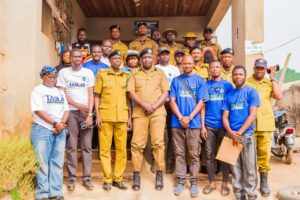
At the NDLEA Ọ̀yọ́ Area Command, the reception was marked by excitement and honour. Officers described the visit as uplifting, particularly for a command constantly engaged in demanding and high-risk operations.
They noted that the seating would support briefings, waiting periods, and engagements with members of the public seeking assistance or information.
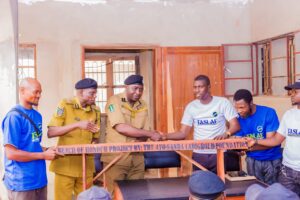
Officials at the FRSC and OYRTMA echoed similar sentiments, praising TASLAF for recognising that road safety enforcement is not only about patrol vehicles and equipment, but also about the welfare of personnel who spend long hours coordinating traffic, responding to emergencies, and interacting with road users.
Across the agencies, one theme stood out: this was not a donation made for headlines, but one made with understanding.
Speaking on the initiative, TASLAF described the Bench of Honour Project as a deliberate effort to strengthen institutions by supporting the people within them.
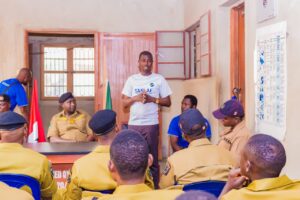
“This is not about suggesting that there was nothing before,” a TASLAF convener explained. “It is about adding where there is little, improving where there is strain, and creating comfort where pressure is constant.”
For the foundation, dignity is cumulative. Small improvements, repeated across institutions, can reshape daily experiences and public perception.
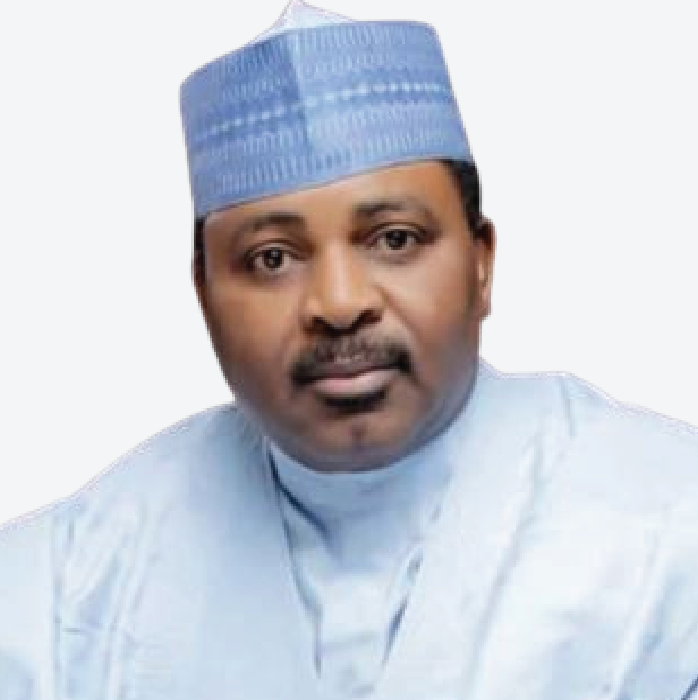
Prince Ayobami Sanda Ladigbolu, PhD, Chairman of TASLAF, noted that sustainable impact often lies in addressing overlooked needs rather than pursuing grand but disconnected projects.
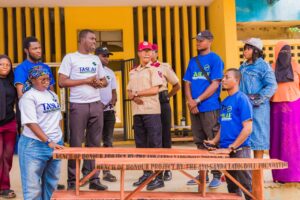
According to him, when officers feel considered, and citizens feel accommodated, trust between institutions and the community naturally improves.
The January 12 exercise marked Phase One of the Bench of Honour Project.
TASLAF has already outlined plans for Phase Two, which will extend similar support to remaining security agencies, as well as religious centres and community bases across Ọ̀yọ́ and its environs.
The broader vision is clear: to strengthen service institutions by improving the everyday conditions under which they operate.
In a society where attention is often drawn to crises rather than quiet gaps, the benches now placed across Ọ̀yọ́ stations tell a different story.
They speak of care without noise, intervention without exaggeration, and impact measured not in applause but in daily use.
They remind officers that their welfare matters, and reassure citizens that the spaces where they seek help are being made more humane.
As TASLAF continues its work under the guiding motto “Creating Hope. Resolving Challenges,” the Bench of Honour Project stands as proof that progress does not always arrive dramatically.
Sometimes, it arrives quietly, adding where there is not enough, restoring comfort where there is strain, and building dignity, one bench at a time.