Lauretta Fagbohun
Abeokuta.
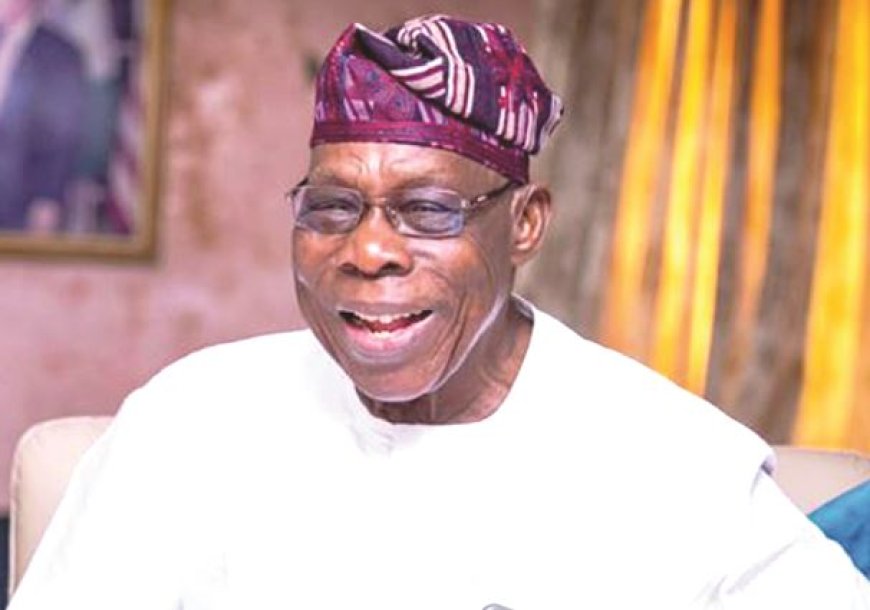
Former President Olusegun Obasanjo has narrated how he turned down an offer of political asylum from the United States despite warnings that he would be arrested upon returning to Nigeria, a decision that eventually led to his imprisonment under the late military ruler, General Sani Abacha.
Obasanjo disclosed this while recounting his experience during Abacha’s military regime in an interview featured in a video published by BBC News Pidgin on Tuesday.
The former president also explained how he ventured into agriculture after retiring from the Nigerian Army, following his tenure as the country’s military Head of State between 1976 and 1979.
According to Obasanjo, he had attained the highest possible rank in the military by the age of 42, having become a four-star general and subsequently occupied the highest political office in the country. He said he therefore decided to retire into farming rather than continue pursuing a military career.
According to Obasanjo, he had attained the highest possible rank in the military by the age of 42, having become a four-star general and subsequently occupied the highest political office in the country. He said he therefore decided to retire into farming rather than continue pursuing a military career.
Obasanjo, who is now 89, said his farming business was progressing successfully until his arrest during Abacha’s administration, which lasted from November 17, 1993, until his death on June 8, 1998.
Recounting how he rejected the American government’s offer of asylum, Obasanjo said the then United States Ambassador to Nigeria informed him that Washington was prepared to grant him political protection because of intelligence suggesting that he would be arrested if he returned to the country.
He, however, said he saw no reason to seek refuge outside Nigeria because he had committed no offence that warranted such treatment.
“I was travelling and coming back, and the American ambassador in Nigeria called me and said his country had offered me political asylum because they knew that I would be arrested if I returned home.
“This was difficult for me. I haven’t done anything. What do they want to arrest me for? I don’t want political asylum,” he recalled.
basanjo further narrated that upon his return to Nigeria, his international passport was seized, prompting him to head to his farm. However, on arriving at the entrance, his security operative alerted him that government security agents had surrounded the premises.
He said a police officer, who was dressed in mufti, subsequently approached him, claiming that an Assistant Inspector-General of Police (AIG) had invited him for assistance.
Rejecting the approach, Obasanjo questioned why the senior police officer would send someone to invite him rather than come personally if he genuinely needed his assistance.
He eventually drove himself to the police station, where the AIG informed him that he had received instructions to arrest the former military Head of State.
Obasanjo also recalled the intervention of former United States President Jimmy Carter, who reportedly appealed to Abacha on his behalf following his detention.
According to him, Carter’s intervention initially resulted in his being placed under house arrest after he had been confined at an undisclosed location.
however, the former president said his ordeal took another turn when security operatives arrived at his residence around 1am while he was playing squash and took him away to prison.
“I didn’t know that it was a decision of Abacha that some of us must not be kept free; otherwise, he would feel unsafe. I was put in a place.
“Then President Jimmy Carter came. He pleaded, and then they put me under house arrest. Then they came one day; I was playing squash at about 1am.
“They came and said they were taking me away. And they took me away, and from there, I went to prison,” he stated.
Obasanjo’s imprisonment came during the final years of Abacha’s military administration, which began after the overthrow of the Interim National Government led by Chief Ernest Shonekan in November 1993.
Following Abacha’s death in June 1998, Obasanjo regained his freedom and subsequently emerged as the Peoples Democratic Party (PDP) presidential candidate for the 1999 general election.
He won the election and was inaugurated on May 29, 1999, becoming Nigeria’s first civilian president under the Fourth Republic. He served two terms, leaving office on May 29, 2007, after handing over power to his successor.