By: Goodluck E. Adubazi, Abuja.
The National Hajj Commission of Nigeria (NAHCON) has disclosed that Saudi Arabia has cancelled the Grade D Hajj package as part of sweeping reforms of its pilgrimage administration, while allocating Nigeria a quota of 50,000 pilgrims for the forthcoming Hajj season.
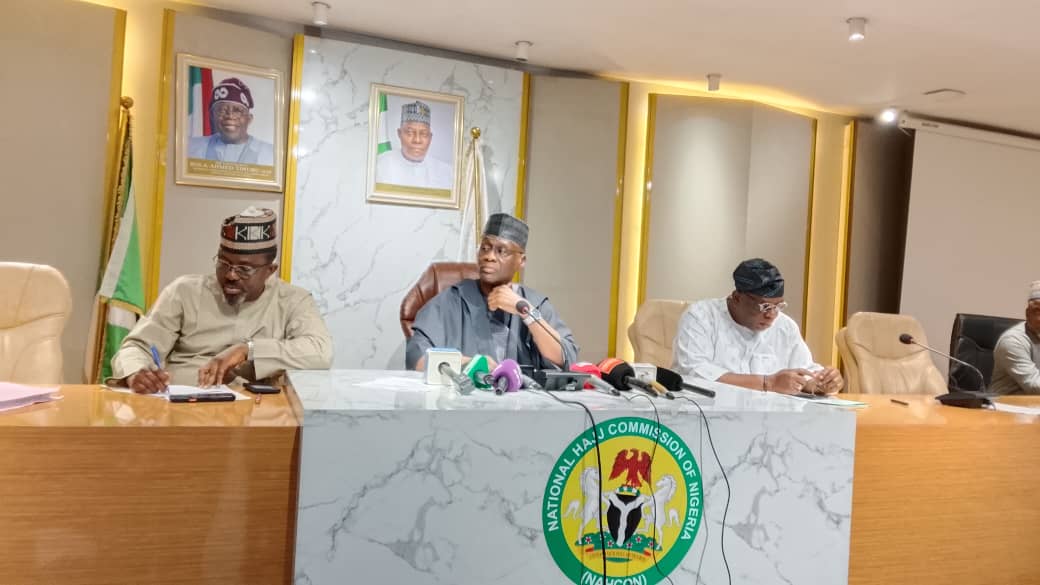
The Chairman of NAHCON, Ambassador Ismaila Abba Yusuf, disclosed this on Monday in Abuja during a media interaction on the new Saudi Hajj policy, operational calendar, quota management, digital transformation and its implications for Nigerian pilgrims, at the Commission’s Headquarters.
Abba Yusuf said the Saudi authorities were implementing a major structural overhaul of Hajj operations under the Saudi Vision 2030, with emphasis on digitisation, commercialisation, stricter regulation, professionalisation and improved safety standards.
According to him, the reforms are designed to move Hajj administration from the traditional state-managed system to a highly regulated business-to-business (B2B) model involving licensed private operators.
He said Saudi Arabia had initially sought to move about 98 per cent of Nigerian pilgrims to the tour operator model, but NAHCON successfully negotiated a phased transition.
“On August 18, 2026, NAHCON secured a major diplomatic concession, getting Saudi approval for a phased transition over a three-year period, commencing with 30 per cent withdrawal from the 2027 Hajj,” he said.
Under the arrangement, Abba Yusuf explained that Nigeria’s 50,000-pilgrim quota would comprise 35,000 pilgrims under the government arrangement and 15,000 under the private tour operator model.
He said the quota was fixed by the Saudi authorities based on capacity, logistics, available services and previous utilisation.
“The 50,000 quota they gave us was sacrosanct. We had an obligation to our nationals to appeal, which we did. Unfortunately, the Saudis turned down our requests on the grounds of capacity utilisation and the fact that they had gone very far in their arrangements,” he said.
The NAHCON chairman said the commission would continue discussions with Saudi authorities for possible adjustments to Nigeria’s quota in subsequent years, depending on the country’s utilisation of its allocation.
On the cancellation of the Grade D package, Abba Yusuf said the Saudi government had reviewed the categories of Hajj services in an effort to ensure that pilgrims receive better accommodation, transportation and other services.
He explained that Hajj packages traditionally differ in the quality and cost of services provided, ranging from premium accommodation to lower-cost options.
He said the cancellation of Grade D would have significant implications for countries such as Nigeria, where many pilgrims save over time to perform the pilgrimage.
“Moving forward, the Saudi government is cancelling the Grade D package because they believe that anybody who comes to perform Hajj should have the best experience,” he said.
However, he clarified that the elimination of Grade D was not peculiar to Nigeria, noting that other countries, including Indonesia and Pakistan, also operate within the package system.
Abba Yusuf said the reform was not an indication that Nigeria was being deliberately assigned to a lower category, stressing that Nigerians who could afford higher packages had always been free to patronise them.
The NAHCON chairman further disclosed that Saudi Arabia was centralising Hajj operations through the Nusuk digital platform.
He said visa applications, hotel bookings, flight confirmations, entry permits and access to the holy sites would increasingly be processed through digital systems.
“This means that you need to embrace digital infrastructure to be able to do that,” he said, stressing that Nigeria must adapt quickly to the new digital regime.
He also disclosed that Saudi Arabia had introduced stricter professional requirements for Hajj administrators.
According to him, Hajj managers would now be required to undergo specialised training in logistics, medical services, disaster management and crowd control before they can be officially recognised.
He said only certified personnel would be allowed to perform official Hajj management functions, although individuals could still travel to Saudi Arabia as ordinary pilgrims
Abba Yusuf also warned that Saudi Arabia would no longer extend key Hajj operational deadlines.
He said the deadline for uploading data for the 2027 Hajj had been fixed for September 26, 2026, adding that the date was “immovable”.
He explained that the strict timeline was necessary because Saudi Arabia had to coordinate the movement and accommodation of nearly two million pilgrims within a highly concentrated period.
“We are fast-tracking business data ingestion to ensure compliance with the September 26 deadline, which, as I said earlier, is sacrosanct,” he said.
The NAHCON chairman also dismissed concerns that the new B2B model would render the commission irrelevant.
He said NAHCON would continue to receive Nigeria’s allocation from Saudi Arabia, select licensed tour operators in accordance with Nigerian and Saudi regulations, and allocate pilgrims to operators based on their capacity and performance records.
“NAHCON is still there. NAHCON is not going anywhere. NAHCON is going to negotiate. It’s going to receive quota on behalf of Nigeria,” he said.
He added that the commission would strengthen regulatory oversight of private tour operators through stricter licensing, monitoring and compliance audits.
According to him, the measure is intended to prevent situations where pilgrims are abandoned or denied services after making payments.
To cushion the effect of the Saudi reforms on Nigerian pilgrims, Abba Yusuf said NAHCON was encouraging state governments to establish state-backed private tour companies that could operate within the B2B framework.
He said the arrangement would help preserve some of the welfare components of the existing public Hajj system while allowing states to participate in the new commercial structure.
The initiative, he explained, could also help keep operating costs and profit margins relatively low compared with fully commercial operators
The commission, he said, had commenced a comprehensive digital transformation programme to bring its operations in line with the Saudi Vision 2030 requirements.
Abba Yusuf said the commission was upgrading its digital infrastructure, training personnel and conducting sensitisation programmes across the country to ensure that states and other stakeholders understood the new requirements.
He added that NAHCON was also strengthening procurement, service delivery, monitoring and evaluation.
Service providers who fail to deliver contracted services, he warned, could be blacklisted and required to refund payments for services not rendered.
Addressing concerns over the possible impact of the reforms on Hajj fares, Abba Yusuf said the commission would continue to negotiate with Saudi service providers to secure favourable rates for Nigerian pilgrims.
He said airfare constituted the largest component of the Hajj package, followed by accommodation, transportation and other services.
According to him, despite the changes introduced by Saudi Arabia, NAHCON was able to negotiate what he described as favourable rates for Nigerian pilgrims.
He noted that the Hajj fare for the current season was lower than that of the previous year despite the changes in the service package
The NAHCON chairman also raised concerns over individuals operating as unlicensed tour operators.
He said some operators had refused to obtain licences while continuing to provide Hajj-related services, describing the practice as one of the issues the commission’s ongoing reforms were designed to address.
He said NAHCON would intensify monitoring of operators, camps, accommodation and other services to protect Nigerian pilgrims.
Abba Yusuf also addressed reports of Nigerians allegedly being abandoned or “dumped” during previous Hajj operations, saying some cases were linked to people who were not part of Nigeria’s official pilgrimage contingent.
He cited an instance where about 30 nationals of Niger were reportedly found in tents allocated to Nigerian pilgrims and subsequently removed before the arrival of the Nigerian contingent.
He, however, acknowledged that some rogue tour operators could be responsible for cases involving Nigerian pilgrims.
The NAHCON chairman further disclosed changes to Saudi Arabia’s Umrah and tourism visa arrangements.
He said holders of certain valid Saudi entry visas could now perform Umrah and also travel within the country for tourism, subject to the conditions attached to their visas.
He warned, however, that visitors must leave Saudi Arabia before their visas expire, stressing that overstaying could attract heavy fines and possible prosecution.
Abba Yusuf said NAHCON was also strengthening stakeholder engagement, including collaboration with the media, to ensure that Nigerians receive timely information about Hajj arrangements.
He said media representatives would be involved in the 2027 Hajj operations to report developments and hold the commission accountable.
“We are not asking the media to hide. We are asking the media to make us accountable and to make us sit up,” he said.
He added that the commission would continue to monitor service providers and engage Saudi authorities whenever policies or operational issues affected the welfare, security and dignity of Nigerian pilgrims.