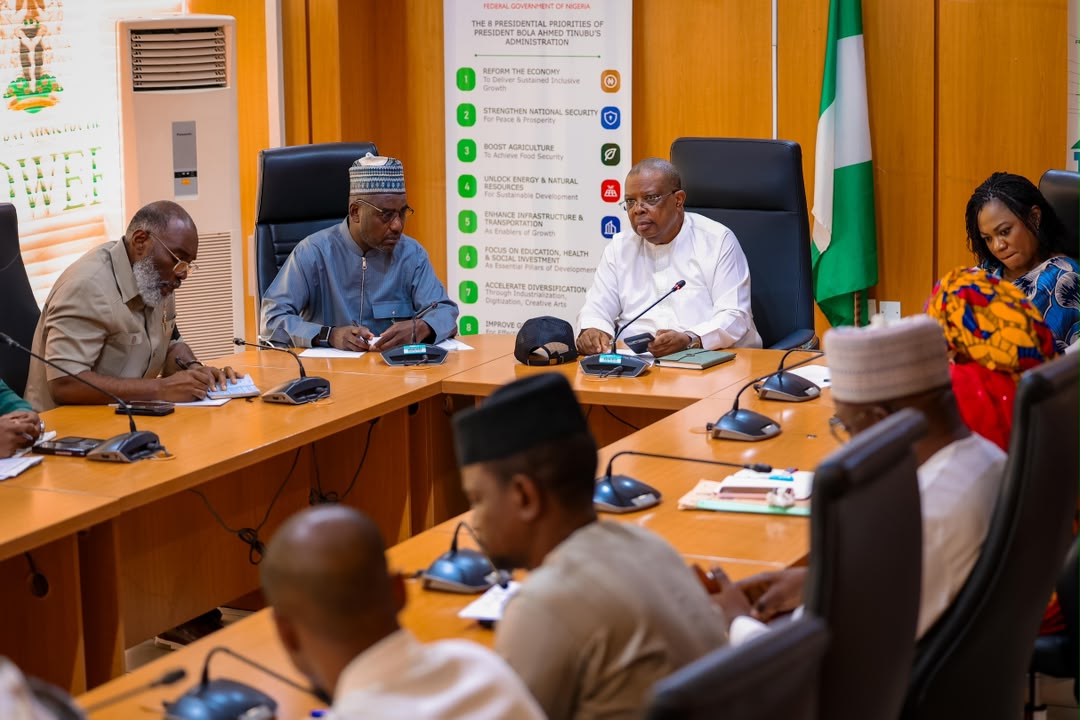
The Transmission Company of Nigeria (TCN), through its Operations Department, today held a technical presentation and live demonstration of a new Load & Outage Analytics platform designed to enhance visibility, monitoring, analysis, and management of the transmission network. The event took place on Wednesday, 26th August, 2026, at the Corporate Headquarters in Abuja with staff and management in attendance.
The Managing Director/CEO of TCN, Engr. Sule Ahmed Abdulaziz, represented by the General Manager, Project Coordination, Engr. Aminu Tahir, opened the session by commending the team for developing and introducing the Load & Outage Analytics software into the company’s operations. He noted that while the full system is not yet available, the technology has already provided greater visibility of the transmission network. He emphasized that technical and commercial losses remain a major concern affecting TCN’s performance, stressing the need for improved understanding and analysis of the transmission system, particularly in the areas of load management and supply-demand matching. According to him, better load management and improved grid stability would help reduce outages, enhance operational efficiency, and lower the costs associated with prolonged interruptions. He added that effective control and maintenance of the system will contribute significantly to reducing losses and strengthening the overall performance and stability of Nigeria’s transmission network.
Following this, Engr. Godwin Afamefuna Aguiyi, General Manager, Operations, delivered the main presentation. He explained that TCN’s current reliability reporting is plagued by fragmented data scattered across spreadsheets in different regions, slow manual reporting processes that take days to compile, inconsistent calculation of key performance indicators, and the absence of a proper audit trail. These inefficiencies, he said, delay management decisions and weaken national reliability assessments.
Engr. Aguiyi introduced the new Load & Outage Analytics platform, a Streamlit-based application with thirteen modules designed to unify operations. Notably, the platform was conceived and built entirely in-house by the Operations Department, barely one year after the creation of TCN’s Transmission Service Operator (TSO) department — underscoring the department’s growing internal technical capacity. The system provides region, station, transformer, and feeder views for load analysis, automatically classifies outages and generates reliability KPI reports, and produces board-ready reports in minutes rather than days. It also incorporates governance features such as role-based access, structured uploads, and full audit trails to ensure accountability. Staff will log in with individual credentials, eliminating shared logins and unmanaged spreadsheet access, while the TCN-branded interface is expected to build trust and reduce training friction.
He showcased July 2026 outage data to demonstrate the platform’s capabilities, noting that the figures presented are representative of raw input submitted from the field by regional teams, and are intended to serve as a working basis for cross-referencing against the Nigerian Independent System Operator’s (NISO) official release for the same period. In that month alone, 3,714 outages were logged nationwide, resulting in 48,603 MWh of load lost. Lagos region accounted for 20,693 MWh of that total, with 572 emergency outages, 306 forced outages, and 129 planned outages. He further revealed that 22 feeders exceeded allowable outage hours, with losses valued at ₦720.33 million. For example, the OBOSI feeder in Onitsha lost 1,063.74 MWh at Band A rates, underscoring the scale of inefficiencies the platform is designed to address. He clarified that this 33kV feeder-level outage data reflects the load and outage segment for which TCN alone is accountable for the month of July, distinct from the portion attributable to the Distribution Companies.
The system also integrates the Fault Attribution Ratio (FAR), a regulatory framework that determines responsibility for service interruptions between TCN and the Distribution Companies. Under the Service Level Agreement, TCN’s allowable downtime responsibility is set at 30 percent, while DisCos account for 70 percent — an allocation basis for permitted downtime rather than a fixed split applied to every individual outage, as each event is separately attributed according to its identified fault type and responsible network segment. Engr. Aguiyi explained that this ensures clear responsibility and compensation, strengthening accountability across the sector. He added that, if fully deployed alongside the necessary interface energy measurement devices, the system would also support the monitoring of Transmission Losses Factor (TLF) across the network. He concluded by recommending nationwide deployment of the platform, IoT integration for real-time data capture, and infrastructure upgrades including systems, display screens, and internet connectivity at all stations.
The Executive Director, Human Resources & Corporate Services, Mrs. Abiodun Afolabi-Fadahunsi, reaffirmed management’s commitment to supporting technical teams to ensure national grid stability. She emphasized equipping engineers and system operators with the tools needed to keep operations seamless, while recognizing their daily professionalism and resilience. She noted that management is monitoring daily grid reports to resolve operational needs in real time and is determined to back technical teams with the resources required to sustain stability.
The unveiling of the Load & Outage Analytics platform marks a significant digital transformation milestone for Nigeria’s power sector. If implemented, it could end decades of manual, fragmented outage reporting, save billions in lost revenue by pinpointing feeder-level inefficiencies, strengthen DisCo accountability under regulatory frameworks, and position TCN as a data-driven transmission operator in Africa’s electricity market. The real challenge will be overcoming infrastructure gaps and securing stakeholder buy-in, but the proposal offers a glimpse of what a modern, accountable power grid could look like in Nigeria.