The Lagos State Ministry of Tourism, Arts and Culture has announced April 6 to host the 2026 Lagos Fanti Carnival as part of efforts to boost cultural tourism, preserve Afro-Brazilian heritage, and strengthen global cultural ties.
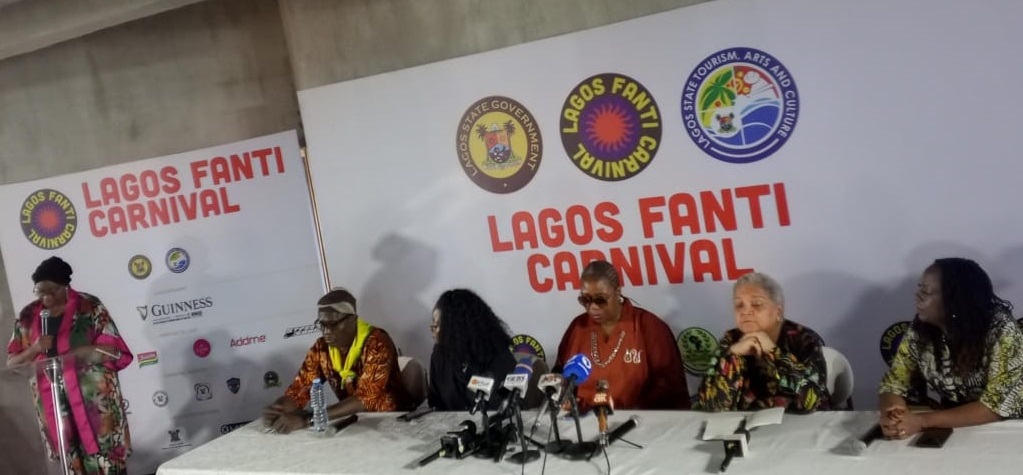
Speaking at a press conference held at Eleganza House, Amah studios in Victoria Island, the Commissioner for Tourism, Arts and Culture, Mrs Toke Benson-Awoyinka, described the carnival as one of Lagos’ most iconic cultural celebrations and a reflection of the state’s rich diversity.
The commissioner announced that the 2026 edition will be held on April 6 at Tafawa Balewa Square, noting that the event will bring residents, tourists, and culture enthusiasts from across Nigeria and beyond.
The Commissioner noted that the Fanti Carnival is more than a festival, describing it as “a living narrative” that showcases identity, resilience, and community through colourful costumes, music, rhythms, dance, and theatrical performances rooted in the history of Afro-Brazilian returnees.
She emphasised that the state government is leveraging cultural tourism as a strategic tool for economic growth, social cohesion, and global visibility, adding that the carnival contributes to local enterprise and empowers creatives.
Benson-Awoyinka also noted the government’s commitment to making cultural heritage appealing to younger generations while preserving its authenticity, ensuring the event remains relevant and globally competitive.
Mrs. Benson-Awoyinka emphasizes that the Fanti Carnival is culturally rooted and serves the economic benefits of serving the local communities and enhancing their economy.
However, among the representatives of key stakeholders, different dimensions of the carnival. Mrs. Tolani Akerele from the National Theatre underscored the importance of cultural identity, particularly for young people, noting that the carnival connects them to their roots while promoting tourism in Lagos.
According to her, understanding one’s origin is essential in shaping the future, stressing that the carnival reflects the history of Afro-Brazilian returnees who came back from Brazil and preserved their identity through festivals, costumes, music, and performances. She noted that beyond cultural expression, the event plays a strategic role in boosting tourism, attracting visitors to Lagos, and showcasing the state’s rich heritage.
The project Director, Mrs. Bolaji Animashaun, revealed that over 40,000 attendees are expected at the carnival, with multiple government agencies, including the Nigeria Police Force, Lagos Waste Management Authority, Lagos State Traffic Management Authority, among other agencies, collaborating to ensure safety, traffic control, and environmental management.
She added that youth participation remains central, with the Lagos State Ministry of Youth and Sports mobilising young people to actively engage in the over 130-year-old cultural tradition.
Meanwhile, the head of the Advisory board committee to the Fanti Carnival, Mrs. Aduke Gomez, disclosed that pre-event activities will include panel sessions focused on economic collaboration, creative exchange, and heritage preservation. She explained that the discussions aim to revive historical trade while strengthening connections with Afro-Brazilian diaspora communities.
She noted that maintaining these historical assets is critical to making Afro-Brazilian history tangible and relatable, rather than abstract.
Gomez described the panel sessions as an opportunity to provide a deeper context for the Fanti Carnival, offering participants a richer understanding of its historical and cultural significance.
Earlier, Mr. Remi Dacosta, a representative of the President of the Brazilian Descendants Association, highlighted ongoing efforts to preserve Afro-Brazilian heritage in Lagos Island, noting that communities such as Lafiaji, Campus, and Olowogbowo remain central to the carnival tradition. He stressed that Afro-Brazilian heritage in Nigeria extends beyond the Brazilian Quarters, with several other historic structures spread across Lagos Island, underscoring the need for greater awareness and recognition.
The Commissioner, however, called on the media and stakeholders to support efforts to project Lagos’ cultural richness globally, inviting the public to participate in what she described as a spectacular celebration of heritage and unity.