By, Goodluck E.Adubazi, Abuja.
The Japan International Cooperation Agency (JICA) has disclosed a major regional initiative to strengthen the fight against financial crimes across Africa, bringing together anti-corruption agencies from 18 countries in Central and West Africa for coordinated training and capacity building.
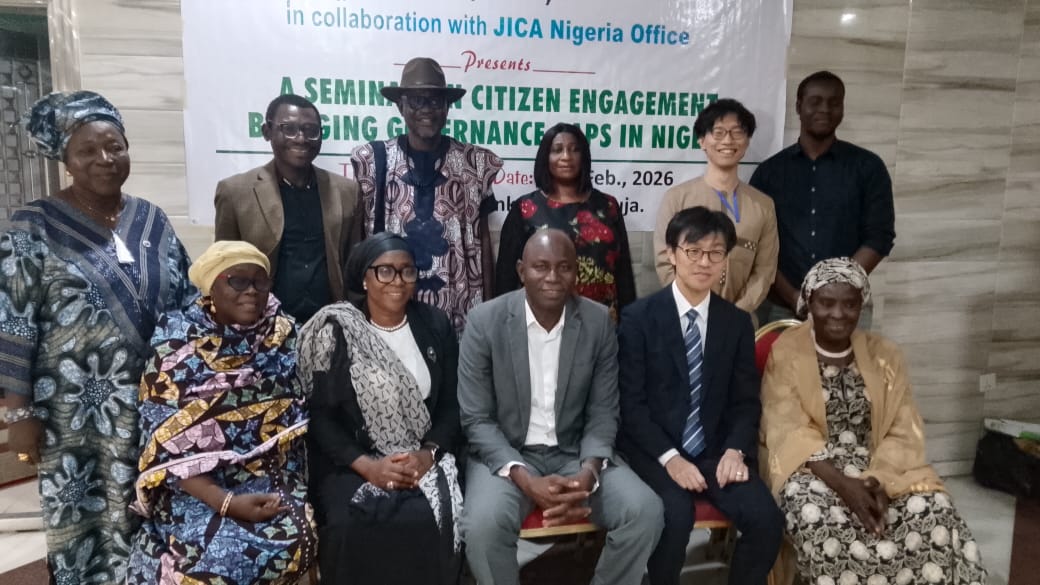
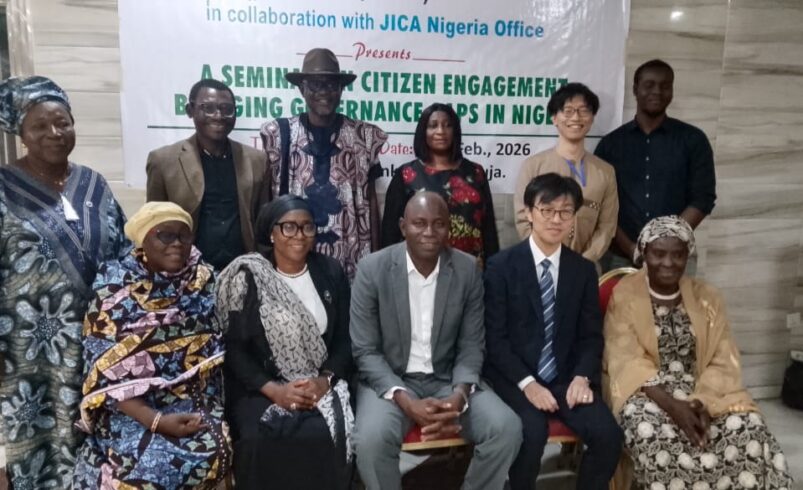
The disclosure was made Wednesday in Abuja during a high-level event on citizen engagement and governance reform organized by JICA in collaboration with the Japan Alumni Association of Nigeria (JAAN).
The one-day event, held at Top Rank Hotel, convened policymakers, administrators, civil society actors and development practitioners to address governance gaps in Nigeria and across the continent.
Further Stressed the need for regional crackdown on financial crimes.
Speaking at the event, JICA Nigeria Representative, Mr. Ishigame Keiji, disclosed that the agency is currently implementing a second phase of its program titled “Strengthening Capacity and Coordination Against Transnational Financial Crimes in Central and West Africa.”
The initiative, conducted in collaboration with INTERPOL, the Nigeria Financial Intelligence Unit (NFIU), and the Economic and Financial Crimes Commission (EFCC), aims to enhance cross-border cooperation and intelligence sharing among anti-graft institutions.
According to Keiji, the program reflects Japan’s commitment to promoting accountability, transparency and institutional efficiency across Africa.
“Good governance is not merely a slogan. It is the foundation for sustainable development, economic growth, social justice and public trust,” he said, stressing that governance must translate into improved service delivery and measurable impact in citizens’ lives.
Keiji described Nigeria as standing at a defining moment, citing its youthful population, growing civic awareness and expanding technological capacity as key advantages that could drive participatory governance.
He identified three pillars for achieving good governance:
Institutional strengthening through digital transformation and performance-based management,
Accountability and transparency in public office
Citizen-centered service delivery.
He added that JICA is also supporting Nigerian officials through a third-country training program in partnership with Ghana’s Civil Service Training Centre under the “KAIZEN for Enhanced Public Service Delivery” initiative.
‘Africa’s Problem Is Absence of Visionary Leaders’
However, the event took a critical turn when governance expert Prof. Aku A. Amboson declared that Africa’s core challenge is the absence of visionary political leadership.
“Africa’s underdevelopment is largely the result of a lack of visionary leaders,” he said. “Everything rises and falls on leadership.”
Amboson questioned Nigeria’s democratic progress since 1999, asking whether citizens could point to concrete evidence of development despite decades of civilian rule.
Referencing remarks by former U.S. Presidents Bill Clinton and Barack Obama, he emphasized that Africa needs strong institutions rather than strong individuals in power.
He criticized what he described as recycled political elites, monetized elections, weak internal party democracy, and the growing disconnect between leaders and citizens.
“If there is peace in our homes, there will be peace in Nigeria,” he said, urging leaders to demonstrate character, competence, compassion and accountability.Earlier in his welcome remarks, JAAN President Ahmed Agberankhe stressed that governance cannot succeed without meaningful citizen participation.
He described Nigeria’s governance gap as “systemic and relational,” marked by a disconnect between policy intentions and grassroots realities.
“Where participation is limited, mistrust widens. Where engagement is institutionalized, transparency improves and accountability thrives,” he said.
Stakeholders at the event, including representatives of civil society groups such as DEAN Initiative, echoed calls for inclusive governance, women’s political participation, transparency in public contracting, and regular free and fair elections.
Speaking on Nigeria democracy and the way forward,
Speakers emphasized that democracy must go beyond periodic elections and evolve into active civic engagement, social accountability, and institutional reform.
They warned that poverty, insecurity, corruption and weak institutions remain major threats to Nigeria’s democratic stability and Africa’s broader development trajectory.
The overarching message from the Abuja gathering was clear: strengthening institutions, combating financial crimes, and deepening citizen engagement are critical steps toward building a governance system that truly serves Nigerians — and sets an example for Africa.