By, Goodluck E.Adubazi, Abuja.
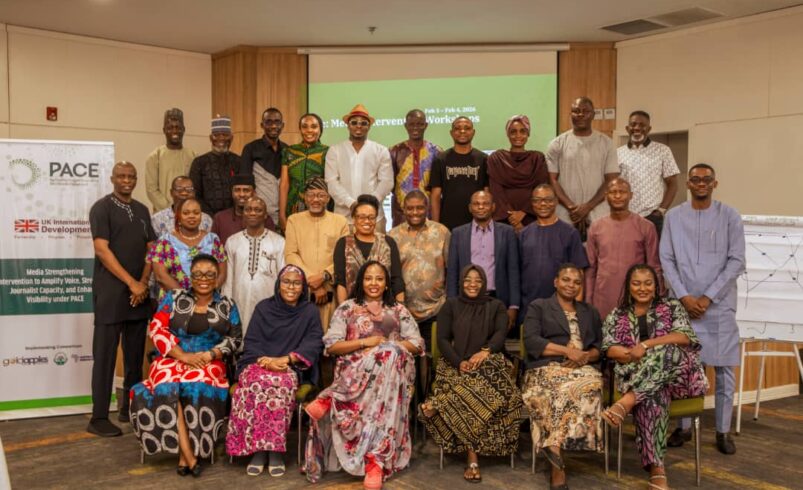
Journalists from Nigeria’s leading print and broadcast media organisations have undergone a two-day intensive training on climate change and governance reporting, organised by the Partnership for Agile Corporate and Climate Engagement (PACE) in partnership with UK International Development.
The workshop, held February 3–4, 2026, brought together journalists from outlets including, Standard Times Nigeria Newspaper , Radio Nigeria, New National Star, The Nation, Leadership, Premium Times, ARISE News, AIT, Fresh FM Ibadan, Solid FM Enugu, among others.
Themed “Media Strengthening Intervention to Amplify Voices, Strengthen Journalist Capacity, and Enhance Visibility,” the training focused on equipping journalists with skills in solutions journalism, climate reporting, and governance accountability.
Strengthening the Media’s Role
Speaking at the workshop, Enene Ejembi, Media Advisory at PACE, described the programme as part of a broader effort to strengthen collaboration between the media, government, and citizens.
“PACE is a UK International Development–funded programme that works with the Government of Nigeria to identify governance and climate challenges and develop solutions that increase prosperity and economic development,” she said.
According to Ejembi, PACE works closely with government institutions to unlock service delivery while also amplifying citizens’ voices by identifying their needs, priorities, and expectations.
“The media is the fourth estate of the realm. Journalists play a critical role in aggregating citizens’ voices and ensuring accountability. That is why we work closely with journalists and media executives,” she added.
On the Purpose of the training,
Ejembi explained that the training was designed to build long-term partnerships with journalists capable of telling the story of PACE’s work in Nigeria and highlighting citizens’ priorities as programmes are developed and implemented.
“This workshop is about building capacity and deepening journalists’ understanding, so they can consistently report on governance and climate issues throughout the lifespan of the PACE programme,” she said.
She noted that PACE adopts a whole-of-society approach, working with civil society organisations, government agencies, community groups, state governments, and the press.
“Governance has more than one side. There is the government side and there is the citizens’ side. We always ask: where are the citizens in this conversation?” Ejembi stated.
On changing global development landscape,
Ejembi also highlighted shifts in global development financing, noting that traditional aid funding is declining while economic development, trade, and domestic financing are becoming more prominent.
“Funding for aid is reducing globally, but funding for economic development and trade is increasing. Nigeria will increasingly fund its own development through ministries, departments, and agencies,” she said.
She urged journalists to approach climate and governance reporting with patriotism and a focus on national development.
“What do Nigerians need to know about climate and governance? How can these lead to more investment, trade, job creation, and prosperity?” she asked.
Expanding Climate Opportunities,
Ejembi stressed the importance of publicising climate finance opportunities, resources, and initiatives that can benefit governments, businesses, and citizens.
“When journalists highlight these opportunities, they help Nigeria attract global investment, deepen existing investments, and create higher incomes and better jobs for Nigerians,” she said.
The workshop featured facilitators and media integration partners from Gold Apples Media (Mr. Ayo Makinde), African Newspage (Mr. Adam Alkali), Helen Bassey-Osijo, CAMIC, and Climate Africa Media Initiatives and Centre.
PACE is expected to run for four years, with continued engagement with the media as a key pillar of its governance and climate interventions in Nigeria.