By: Edem Archibong, Calabar.
The new and controversial taxes Law before National Assembly approval to be passed into law for Presidential consent has clearly stated that any Nigerian who do not earn a total sum of more than#800,000.00 (Eight Hundred Thousand Naira) annually as income cannot pay tax while a company that cannot earn income of more than #100 million per annum is also excempted from taxes payment in Nigeria.
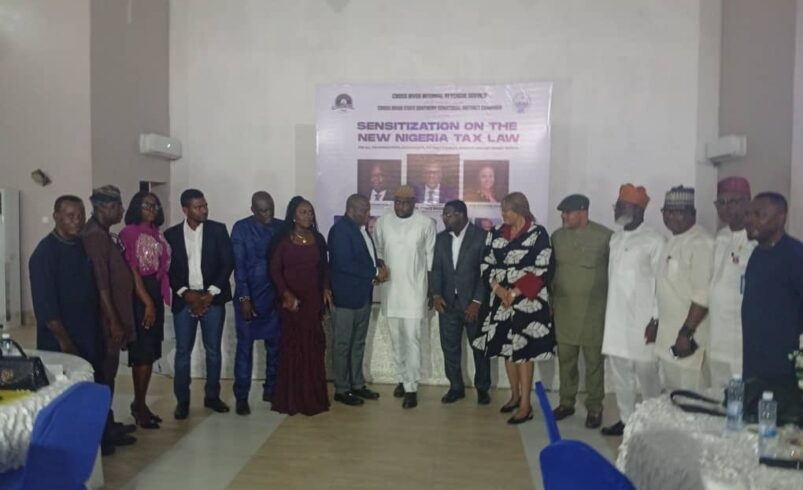
This information was revealed in Calabar during a one-tax Law sensitization workshop organized by the Cross River State Internal Revenue Service for the tax stakeholders under the Chairmanship of Prince Edwin Okon, Chairman of Cross River State Internal Revenue Service (IRS).
Prince Okon who was represented by Dr. Patience Egwu, the Head of Revenue Assurance in the state’s Internal Revenue Service IRS declared that henceforth, the Chairmen of Local Government Council Areas must be ready to follow the national uniform tax law by ensuring that they also comply to establish Revenue Committee to handle tax assessment and collections at the Local Government levels.
She further explained that the committee, when constituted at the Local Government level, will be responsible for the collection of taxes, fines, levies, and rates within their areas of jurisdiction while operating autonomously of the Local Government Treasury without the collection of cash or Payment of cash to any staff or mounting any roadblocks.
Dr. Egwu also used the opportunity to warn the staff of the state Internal Revenue Service, IRS, to exercise restraint as no staff member must collect any cash from the taxpayers directly because such actions amount to lawlessness and are not authorized by the service.
The workshop further explained that the Churches in Nigeria are exempted from payment of taxes, but in special cases where the Churches operate business ventures such as schools and hospitals, such businesses must be seen as paying taxes to the Government on the profits they make.
Similarly, the Churches are required to always deduct Pay-As-You-Earn (PAYE) and remit the same to the state government accordingly, while advising that Pastors’ Salaries should not be used for the payment of taxes, rather the taxes should be deducted directly from those employees earning between #800,000.00 and above.