By: Lauretta Fagbohun, Abeokuta.
The Ogun State Commissioner for Women Affairs and Social Development, Adijat Adeleye, has disclosed that a total of 502 cases of Gender-Based Violence (GBV) were recorded across the state in 2025, describing the figure as alarming and reflective of a deepening crisis affecting women, girls and other vulnerable groups.
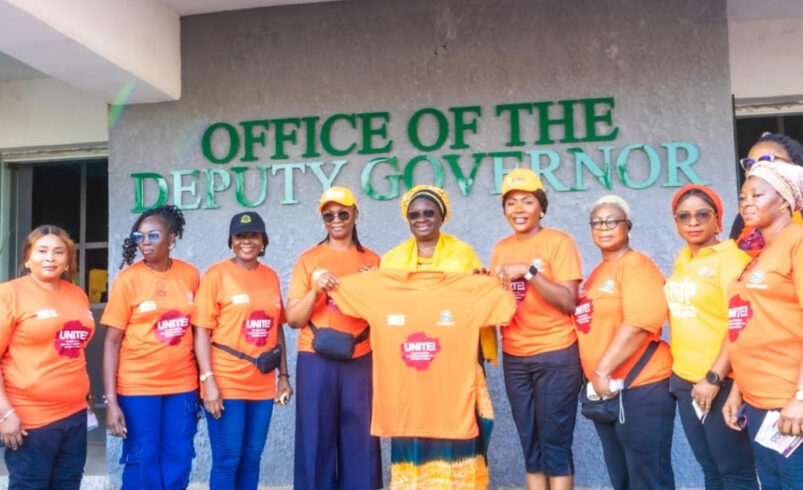
Adeleye revealed the data during an interview held after an advocacy walk in Abeokuta to mark the 16 Days of Activism Against Gender-Based Violence. She explained that the cases cut across sexual assault, domestic violence, child molestation, digital harassment and intimate partner violence. According to her, the situation highlights the urgent need for reinforced legal protections and more coordinated institutional responses to safeguard survivors and ensure perpetrators are brought to justice.
Providing a breakdown of the cases, the commissioner stated that 120 were reported through the State Sexual Assault Referral Centres (SARCs), while the remaining incidences were captured through area offices and partner organisations. She, however, stressed that these numbers represent only a fraction of actual occurrences, as many victims particularly women and children still choose silence due to fear, stigma or societal pressure.
Adeleye expressed particular concern over the sharp rise in digital related abuse, including cyberbullying, online harassment, sextortion and impersonation. Speaking on the theme of the global campaign, “Unite to End Digital Violence Against Women and Girls,” she warned that technology has become a new frontier for GBV, enabling perpetrators to attack victims remotely and anonymously. She noted that increased online exposure among young people has made them more vulnerable to grooming, extortion and emotional manipulation.
The commissioner highlighted several interventions being implemented by the Ministry in collaboration with the Ogun State Economic Transformation Project and the United Nations Population Fund (UNFPA). These include strengthening SARCs, expanding temporary shelters for survivors, and intensifying capacity building programmes for law enforcement officers, teachers, health practitioners and social workers, particularly on digital safety and GBV response.
She added that the Ministry has expanded state wide sensitisation campaigns in both rural and urban communities, working closely with traditional rulers, religious leaders and schools to challenge cultural norms that sustain violence. The state has also strengthened Comprehensive Sexuality Education (CSE) to equip young people with knowledge on personal safety, consent and digital responsibility.
Adeleye, however, identified several institutional challenges hampering progress, including slow judicial processes, family interference, inadequate funding for survivor services and poor inter agency coordination. She cited a recent case involving the defilement of two minors, where the perpetrator remains at large despite strong evidence and medical findings, describing the situation as a painful reminder of systemic failures.
To address these gaps, the commissioner called for bold legal reforms, including the formal classification of rape as a non bailable offence and the provision of safe pregnancy termination options for survivors of rape and incest. She argued that granting bail to offenders often leads to survivor intimidation and obstructs investigations.
Adeleye further appealed to parents, teachers, digital platform operators and community leaders to take greater responsibility for protecting children from online risks. She encouraged men to play active roles as allies in dismantling harmful gender norms, stressing that ending GBV requires a collective societal effort.