By: Tijani Salako.
Dr. Adesina Aladeloba, Dean, School of Environmental Studies, Yaba College of Technology, has blame the constant cases of building collapse in Nigeria to poor strategic communication among stakeholders in the construction industry.
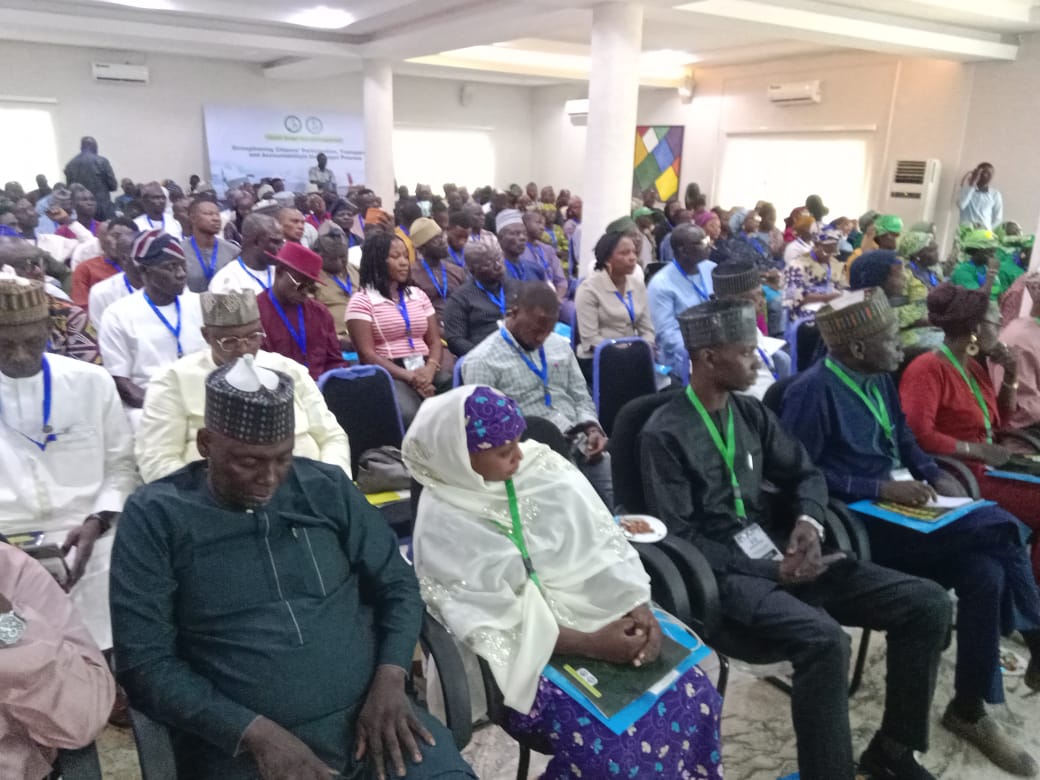
This statement was made during the institution’s 19th inaugural lecture titled “Communication: Why the Tower Remained Abandoned Heretofore” held at the Yusuf Grillo Hall, YabaTech, Lagos.
Aladeloba argues that fragmented and conflict-prone construction processes, often involving multiple players with divergent interests, could be resolved through deliberate and effective communication strategies initiated from the design stage.
Illustrating the biblical story of the Tower of Babel as a symbolic reference, he noted how the absence of clear communication has historically derailed ambitious human projects. He stressed that while cost, quality, and time remain the most common benchmarks in the industry, communication breakdown and lack of team cohesion are often the silent drivers of project failure.
“Effective communication is not just about exchanging messages; it’s about choosing the right tools, channels, timing, and tone to foster understanding and collaboration,” he said.
Aladeloba categorised communication as complete, incomplete, and absent, expressing that incomplete communication causes setbacks, total lack of communication leads to chaos and collapse presenting a communication model framework of Shannon-Weaver and Berlo’s communication Sender-Message-Channel-Receiver (SMCR) models to show how poor encoding, wrong channel selection, and lack of feedback create misunderstandings.
He lamented the huge human and material losses resulting from abandoned and collapsed projects in Nigeria, pointing out that many failures stem from simple but overlooked communication gaps.
To tackle the problem, Aladeloba proposed practical reforms and digital innovation, including the adoption of his proprietary project management software, Buildcom (NWAVE), designed to streamline communication and reduce costly errors.
He also calls for curriculum updates and closer industry-academia collaboration to train professionals in communication skills for sustainable development.
Beyond technical solutions, he highlighted the spiritual and philosophical dimensions of architecture, noting that every structure reflects the intention of its designer. Citing Noah’s Ark as an example of successful project delivery through clear instructions and structured communication, he said failures in Nigeria’s construction sector are rooted more in poor communication than in lack of funds or expertise.
“Communication is the lifeblood of any successful project. Without it, even the best plans will collapse,” he warned. “We must treat communication as a strategic asset, not an afterthought.”
He offered six recommendations, including improving communication tools and speed, adopting predictive models, and embracing locally developed digital solutions. He also cautioned against over-reliance on foreign technologies, warning that excessive data storage abroad could result in “digital colonisation.”
In his remarks, the Rector, Dr Ibraheem Abdul, reinforced Aladeloba’s message, noting that while discussions of project performance often center on cost, time, and quality, the communication practices underpinning these outcomes are rarely interrogated. He stressed that the absence of mutual trust and shared understanding from the onset frequently results in breakdowns that threaten the survival of construction projects.