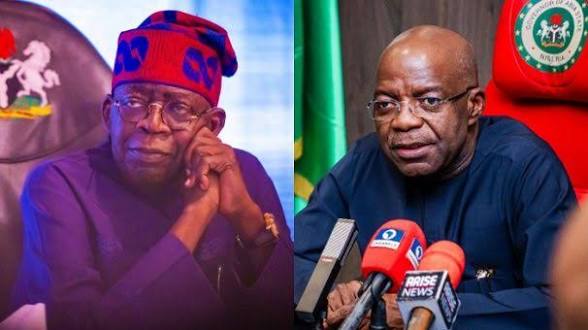
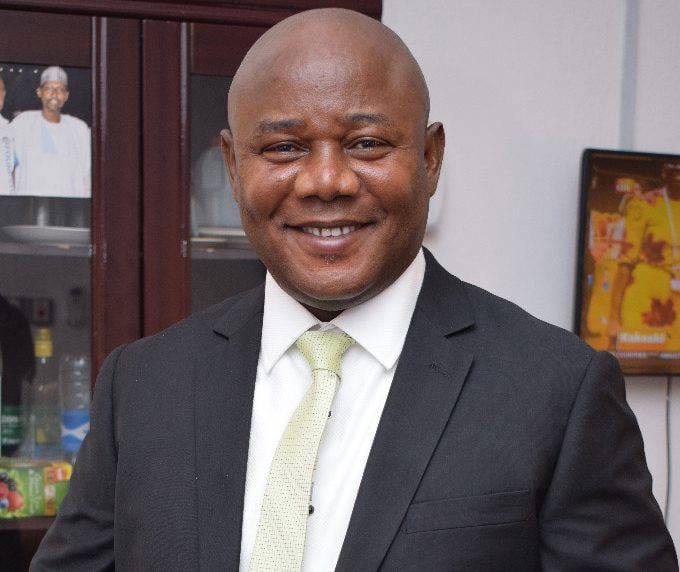
A Labour Party chieftain in Abia State, Emmanuel Nwoko, has urged Governor Alex Otti to acknowledge the contributions of President Bola Ahmed Tinubu, the Federal Government and development partners to the ongoing construction and rehabilitation of rural roads under the Rural Access and Agricultural Marketing Project (RAAMP).
Nwoko, who spoke with journalists in Umuahia on Monday, said it was misleading to present all RAAMP road projects in the state as being solely funded by the Abia State Government.
He explained that RAAMP is a Federal Government-initiated programme financed substantially through the World Bank’s International Development Association (IDA) and the French Development Agency (AFD), with participating state governments providing counterpart funding and supporting implementation.
According to him, Governor Otti deserves commendation for meeting Abia’s counterpart funding obligations and committing additional resources to the implementation of the programme, but other stakeholders should also receive appropriate recognition.
“We must be fair to everybody. Governor Otti deserves commendation for paying Abia’s counterpart funding and ensuring that the programme is implemented effectively in the state. But these roads are not solely funded by the Abia State Government,” Nwoko said.
He cited the original financing structure of RAAMP, which he said had an overall project envelope of about $575 million, comprising approximately $280 million from the World Bank’s IDA, $230 million equivalent from AFD and about $65 million in government contributions.
Nwoko also pointed to the role of the National Assembly in the financing arrangements, noting that components of the Federal Government’s External Borrowing Rolling Plan considered and approved by the Senate in July 2021 included financing for RAAMP.
He said acknowledging the legislative process did not mean individual lawmakers should claim ownership of specific road projects, but that the role of the National Assembly in approving federal borrowing for development programmes should not be overlooked.
Nwoko acknowledged the contribution of the Otti administration, recalling that during the October 2024 flag-off of the 19.1-kilometre Itungwa-Mgboko-Amaise-Amairi-Ahiaba Ubi-Nkwoelechi-Omoba road, the governor announced that the state had paid N600 million as counterpart funding and released an additional N2.6 billion to support the project.
He said the state’s contribution represented a significant commitment that deserved recognition.
“Governor Otti has done what a responsible participating state government is expected to do, and he deserves credit for that,” he said.
However, Nwoko stressed that RAAMP predates both the Otti and Tinubu administrations, noting that World Bank financing for the programme was approved in 2020 and the AFD loan agreement also dates back to the same year.
He argued that the fact that the programme was initiated before the current administrations did not mean the present Federal Government should be excluded from recognition for continuing its implementation.
“Government is a continuum. President Tinubu did not create RAAMP and Governor Otti did not create RAAMP. But today, Tinubu heads the Federal Government under which the federal side of the programme is continuing, while Otti heads the participating state government implementing it in Abia,” he said.
Nwoko urged political leaders and their supporters to avoid presenting development projects as the exclusive achievements of one tier of government, saying greater transparency would help citizens understand how projects are funded and implemented.
He said Abians were ultimately the beneficiaries of the road projects, regardless of whether funding came from the Federal Government, state government or development partners.
“Governor Otti deserves his credit. President Tinubu and the Federal Government deserve theirs. Our federal lawmakers should also be acknowledged for the role of the National Assembly, while the World Bank and AFD deserve recognition for providing substantial financing,” Nwoko said.
“We don’t have to diminish one person to recognise another. All we are asking for is fairness.”