By: Tijani Salako.
The Founder and Executive Director of Housing Development Advocacy Network (HDAN), Mr Festus Adebayo has identified affordability rather than supply, as the major challenge to Nigeria’s housing crisis, stressing that adequate housing goes beyond the four walls and roof
Adebayo, who spoke as guest speaker at the 2026 World Habitat Day held in Lagos, Blue Roof Hall, Agidingbi, Ikeja said the country must first determine who it was building houses for and consider their income levels before embarking on housing projects.
He said, “We should firstly define who we are building for before we start building the housing. We should firstly consider the income of the people we are building for before we start building the house.”
According to him, adequate housing goes beyond having a physical structure, as a home must be safe, secure, affordable, habitable and accessible, while also being connected to basic services, livelihoods and other opportunities.
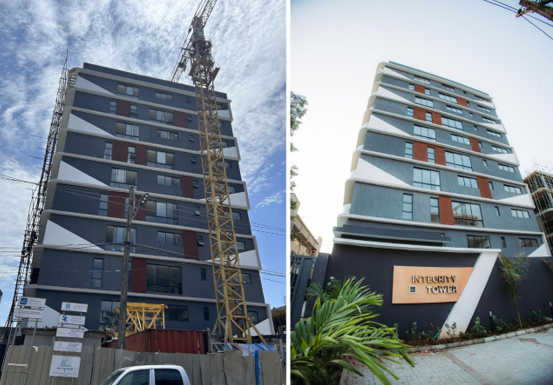
He said the presence of completed houses did not necessarily mean that the housing problem had been solved, noting that many houses in Lagos and other parts of the country remained unoccupied because they were beyond the financial reach of the people who needed them.
Adebayo said, “We have houses that have been built, but people cannot afford them. You go to some areas in Lagos, particularly Lekki, you see houses everywhere, but the question is: who are the people that can afford these houses?”
He argued that government should focus on creating an enabling environment for housing delivery rather than attempting to provide all the houses needed by the population.
According to him, “Government cannot build all the houses that we need. Government should be an enabler. Government should create the environment for the private sector to come in and build.”
He identified access to land, mortgage finance, high construction costs and delays in building approvals as some of the major barriers to affordable housing delivery.
Adebayo said delays in the approval process could increase the cost of housing development, with developers eventually transferring the additional costs to prospective buyers and tenants.
He also called for greater consideration of alternative and locally available building materials as part of efforts to reduce construction costs without compromising quality and safety.
The housing advocate said housing should be regarded as an essential part of the country’s economic and social infrastructure, rather than treated solely as a private asset.
He said, “Housing is not just a social issue. Housing is also an economic issue. Housing should be treated like infrastructure, just like roads, airports, rail and power.”
Adebayo further argued that measuring housing performance solely by the number of units constructed could give a misleading picture of the country’s housing situation.
According to him, “It is not about how many houses we have built. It is about how many people can afford the houses, how many people can access them and how many of those houses are actually occupied.”
He warned that the continued inability of workers and young people to secure affordable housing could have wider economic and social consequences, stressing that housing unaffordability should be addressed before it develops into a broader social crisis.
Adebayo urged policymakers, developers and other stakeholders to put affordability at the centre of housing policies and ensure that new developments were matched with the income realities, infrastructure needs and livelihoods of intended residents.
However, Adebayo said the affordability challenge was not peculiar to Nigeria, pointing to housing pressures in countries including Spain, Ghana, Rwanda and Kenya, where rising rents, access to housing and the ability of ordinary residents to secure adequate accommodation had also become major concerns.
He said the experience of other countries showed that housing could become a wider social and economic problem when ordinary workers and families were priced out of the market.
“Housing unaffordability can become an economic problem and then become a social crisis,” he warned.
He said Nigeria should therefore learn from international experiences and place affordability at the centre of housing policy, rather than focusing primarily on the number of houses constructed.