By: Goodluck E.Adubazi, Abuja.
Stakeholders in West Africa have called for the establishment of an Economic, Social and Cultural Council (ECOSOCC) for the Economic Community of West African States (ECOWAS) to deepen citizens’ participation, strengthen civil society engagement and advance regional integration.
The proposal was made on Monday in Abuja at a two-day regional dialogue and experience-sharing workshop themed “ECOWAS of the People: Strengthening Citizens’ Participation and Regional Integration through ECOSOCC Engagement in West Africa.”
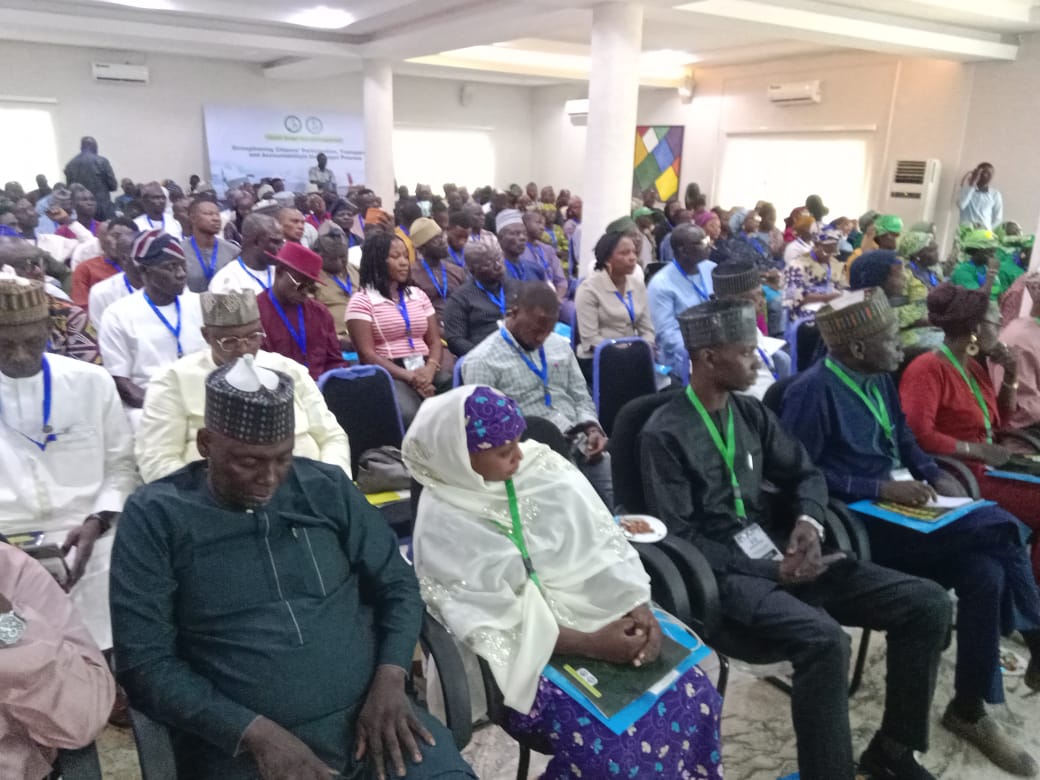
The workshop brought together civil society organisations, regional institutions and other stakeholders to examine lessons from existing ECOSOCC models under the African Union and the United Nations and develop recommendations for establishing an ECOSOCC for West Africa.
Speaking during the first-day session on “Advancing the Establishment of ECOSOCC-WA: Comprehensive Analysis of ECOSOCC Models, Vision 2050, Past Experiences and Tailored Recommendations for ECOSOCC-WA,” Regional Advocacy Officer of WADEMOS, Austin Aigbe, said the proposed institution must be built on inclusivity, transparency, accountability and equitable geographical representation.
Aigbe stressed the need for clear accreditation criteria for civil society organisations seeking membership, warning that issues such as legal status, internal democracy and financial transparency must be carefully considered.
According to him, ECOSOCC-WA should not be limited to national organisations but must have a strong pan-regional orientation capable of reflecting the realities and diversity of West Africa.
He said the proposed council should institutionalise citizens’ participation in regional affairs and create a structured platform through which citizens can contribute to policymaking and regional integration.
“Parliament can meet. The court can decide. The people can decide. Because the people give legitimacy to other organs,” he said.
Aigbe proposed a structure comprising a General Assembly, Executive Committee, sectoral committees, a Secretariat and national civil society platforms, arguing that such a framework would create a bottom-up approach to regional governance.
He said the initiative should decentralise ECOWAS and make its activities more visible and understandable to citizens, particularly those in rural communities.
According to him, the proposed ECOSOCC-WA would help citizens understand what ECOWAS does and create stronger links between the regional institution and the people.
He disclosed that stakeholders were already developing a short-, medium- and long-term advocacy strategy, including high-level diplomacy, stakeholder engagement, coalition building, mobilisation and technical engagement with ECOWAS institutions.
Aigbe also emphasised the importance of strategic communication and the media in building public understanding and support for ECOSOCC-WA.
He urged civil society organisations to combine advocacy with diplomacy, stressing that effective engagement requires stakeholders to be sufficiently informed about the history, structures and complexities of regional integration.
“Civil society can play an advocacy platform to support what is happening internally,” he said, adding that stakeholders must be “diplomatically vocal” and seek opportunities to get into decision-making spaces rather than merely criticising from outside.
On conflict resolution, Aigbe said ECOSOCC-WA could serve as an important platform for dialogue and mediation between citizens, governments and regional institutions.
He explained that members drawn from different countries would bring local knowledge and perspectives that could help resolve regional disputes and improve policy responses.
Aigbe, however, acknowledged that political resistance could constitute a major challenge to the establishment of ECOSOCC-WA.
He said the initiative should therefore begin gradually, with short- and medium-term objectives leading eventually to an integrated and institutionalised ECOSOCC for West Africa.
He maintained that the proposed institution was consistent with the broader objectives of regional integration, inclusivity and peacebuilding.
“ECOSOCC West Africa is a historic opportunity for better civil society strengthening, legitimacy, trust and resilience,” he said.
Also speaking, Adekunle Lukman of the UN-ECOSOCC said ECOWAS needed to move closer to its citizens by expanding opportunities for grassroots organisations to participate in regional policy processes.
Lukman, who spoke on UN-ECOSOCC engagement frameworks, highlighted the importance of improving policy dialogue between governments and citizens and creating regular platforms for interaction between governments and civil society organisations.
He noted that the United Nations Economic and Social Council (ECOSOC) is one of the six principal organs established under the UN Charter in 1945, stressing that its engagement framework offered useful lessons for ECOWAS.
Similarly, Bright Sefah of AU-ECOSOCC, while presenting “AU-ECOSOCC: Successes, Challenges, Prospects and Lessons for an ECOSOCC-WA,” said the African Union model provides an official platform for African civil society organisations to contribute to continental policy formulation and development.
He said lessons from the AU-ECOSOCC experience could guide West Africa in designing a more effective mechanism for citizens and civil society organisations to participate in regional affairs.
The stakeholders agreed that the proposed ECOSOCC-WA should be inclusive, transparent, accountable and representative of the diverse linguistic and geographical composition of West Africa, including English-, French- and Portuguese-speaking countries.
They also called for the formation of a broad coalition of civil society organisations and other stakeholders to sustain advocacy for the establishment of the council and ensure that the initiative translates into concrete institutional action.
The two-day dialogue is expected to further examine the models, challenges and prospects of citizen participation in regional governance and develop a roadmap towards the establishment of an ECOSOCC for West Africa.
Dr. Dauda Garuba, Co-Chair of WADEMOS, and Paul Osei-Kuffour, Network Coordinator of WADEMOS, set the tone for the dialogue in their respective welcome and opening remarks, highlighting the purpose and objectives of the gathering.