Journalists have been urged to shift from personality-driven political reporting to issue-based journalism that promotes accountability, informed voting and good governance ahead of the 2026 Osun State Governorship Election.
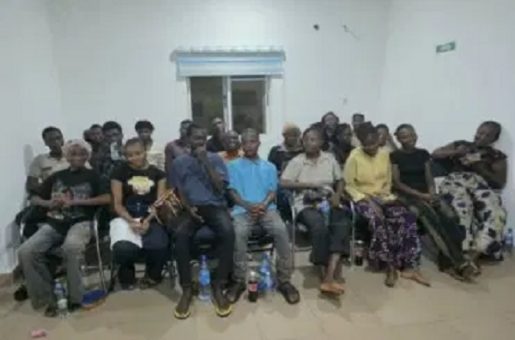
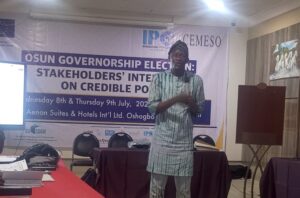
The call was made by Dr. Rasheed A Adebiyi of the Department of Mass Communication, Fountain University, Osogbo, during a training programme organised by the International Press Centre (IPC) under the European Union Support to Democratic Governance in Nigeria (EUSDGN II) project.
The training, held as part of Component 4 (Support to Media) of the EUSDGN II project, is designed to strengthen the media for fair, accurate, ethical and inclusive reporting of electoral processes. It also aims to expose journalists to best practices in professional, factual and conflict-sensitive coverage of the forthcoming Osun governorship election while promoting peaceful polls.
Speaking during his presentation, Dr. Adebiyi lamented that the media often abandons important governance issues once fresh political controversies emerge, allowing politicians to dictate the public agenda instead of journalists.
According to him, the media has a constitutional responsibility not only to inform but also to educate and enlighten citizens by providing deeper analysis of governance issues rather than limiting coverage to campaign rallies, defections and political disputes.
“The media does not simply report elections; it defines what voters think is important. It determines what candidates are forced to discuss, what governments are held accountable for, and ultimately what democracy becomes,” he said.
He stressed that journalists must take advantage of their agenda-setting role by compelling candidates to address pressing issues affecting residents, including security, employment, agriculture, infrastructure and economic development.
Dr. Adebiyi noted that election reporting in Nigeria is largely episodic, with journalists focusing only on unfolding events before quickly moving to other stories without sustained follow-up or accountability reporting.
He argued that while political events naturally attract attention, journalists should deliberately investigate governance failures, policy implementation and developmental challenges that directly affect citizens.
The communication scholar disclosed that a recent IPC survey showed that Osun residents consider employment, security, agriculture and public safety among their highest priorities ahead of the election. However, he observed that media reports continue to focus disproportionately on defections, campaign activities and political personalities.
He therefore encouraged newsrooms to develop editorial strategies that place governance issues at the centre of election coverage rather than sensational political conflicts.
Dr. Adebiyi also introduced a Governance-Led Candidate Evaluation Framework, urging journalists to assess governorship candidates using both personality and competency indicators.
According to him, personality assessment should examine candidates’ emotional intelligence, communication style, accessibility, empathy, conflict management ability, integrity and consistency, while competency evaluation should focus on administrative experience, policy understanding, economic management capacity, crisis response and team-building ability.
He further advised journalists to thoroughly interrogate candidates’ records and campaign promises instead of merely reproducing political statements.
The media scholar also cautioned against allowing politicians to dominate public discourse through carefully managed campaign narratives, saying journalists must instead set independent agendas that reflect the genuine needs of citizens.
While acknowledging the economic realities facing media organisations, Dr. Adebiyi urged editors and reporters to balance commercial considerations with their public service responsibility.
He maintained that journalism should remain “profit with purpose,” insisting that credible reporting can both sustain media organisations and strengthen democratic governance.
He concluded by encouraging journalists covering the Osun election to prioritise issue-based debates, rigorously fact-check political claims, scrutinise candidates’ past performances and ensure their reports help voters make informed electoral decisions rather than emotional choices.