The 2025 Africa Cup of Nations final between Senegal and the host nation, Morocco, was supposed to be a crowning moment for African football, a celebration of talent, culture, and continental pride. Instead, it descended into one of the most dramatic and controversial nights in AFCON history, leaving fans divided, officials defensive, and global football authorities quietly uneasy.
Long before kickoff at the packed Prince Moulay Abdellah Stadium in Rabat, the tension was unmistakable. Moroccan supporters flooded the city in red, confident that history was on their side and that the Atlas Lions would finally lift the trophy on home soil.
Senegalese fans, fewer in number but louder in resolve, carried memories of past heartbreaks and recent triumphs. They believed this generation of Lions of Teranga was built for hostile territory and high-pressure moments.
From the opening whistle, it was clear this would not be a conventional final. Every challenge was greeted with roars, every refereeing decision scrutinized, and every Senegalese attack met with relentless booing.
Morocco dominated early possession, pinning Senegal deep and forcing several last-ditch clearances. The hosts looked composed, but their final ball repeatedly failed them.
Senegal, patient and disciplined, absorbed the pressure and struck on the counter. Their game plan was clear: frustrate the hosts, silence the crowd, and wait for the decisive moment.
Refereeing decisions quickly became a subplot. Moroccan fans protested a series of fouls they felt should have resulted in yellow cards, while Senegal complained of soft calls breaking their momentum.
As the first half ended goalless, whistles rang out, not for the players, but for the officiating crew, whose every move was now under microscopic public judgment.
The second half intensified the drama. Morocco pushed harder, with wave after wave of attacks, while Senegal’s goalkeeper produced a string of heroic saves that kept the scoreline frozen.
Tempers flared midway through the half when a penalty appeal by Morocco was waved away. The stadium erupted in fury, players surrounded the referee, and the game was halted for several minutes.
VAR checks came and went, but the decision stood. For Moroccan supporters, it felt like a robbery in progress; for Senegal, it was justice finally favoring discipline.
Extra time arrived with both teams visibly exhausted, legs heavy and minds stretched thin by the weight of expectation.
Then came the moment that would define the final. In the 103rd minute, Senegal capitalized on a rare Moroccan defensive lapse, delivering a precise strike that cut through the Rabat night.
The stadium fell into stunned silence, broken only by the eruption of Senegalese players sprinting toward the corner flag.
Moroccan players collapsed to the turf, some in disbelief, others in rage. The hosts threw everything forward in desperation, but Senegal’s defense held firm.
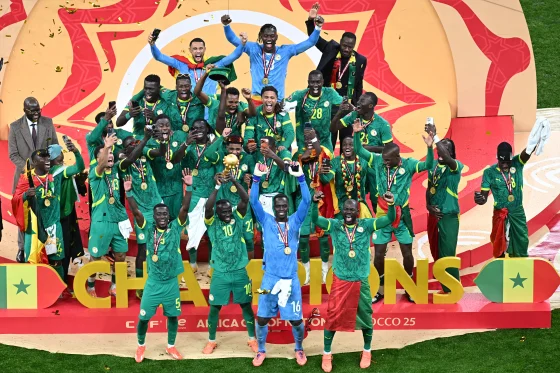
At the final whistle, chaos followed celebration. Senegal rejoiced in a historic away triumph, while Moroccan fans booed, jeered, and hurled accusations at officials.
Security personnel rushed to contain heated confrontations near the tunnel, as players from both sides exchanged words and gestures.
Social media exploded within minutes, with hashtags accusing officials of bias trending across North Africa and beyond.
Replays of key moments circulated endlessly, each frame dissected to support opposing narratives of fairness or conspiracy.
In the background, FIFA officials monitored the fallout closely. While no immediate statement was issued, sources indicated growing concern over crowd control, officiating credibility, and the optics of such a volatile final.
FIFA’s unease was not about the scoreline alone, but about the broader image of African football on the global stage.
The organization is understood to be reviewing match reports, referee performance assessments, and security operations surrounding the final.
The prolonged stoppages, aggressive crowd reactions, and post-match scenes raised questions about preparedness for high-stakes continental events.
For CAF, the final became both a sporting success and an administrative headache, proof of AFCON’s passion, but also of its fragility under pressure.
Senegal’s victory, while deserved on tactical grounds, risked being overshadowed by controversy rather than celebrated for footballing excellence.
Moroccan officials, meanwhile, stopped short of formal protests but hinted strongly at dissatisfaction, calling for “institutional reflection” on refereeing standards.
Analysts noted that the AFCON final had once again exposed the thin line between spectacle and scandal in African football.
Neutral observers acknowledged Senegal’s discipline and resilience, while also admitting that Morocco had reasons to feel aggrieved.
The final did not just crown a champion; it reopened long-standing debates about officiating, VAR consistency, and host-nation pressure.
In African football folklore, this final will be remembered less for the goal and more for the storm it unleashed.
As Rabat slowly returned to normalcy, the echoes of that night lingered in conversations across the continent.
Senegal returned home as champions, but also as unwilling central figures in a controversy that may define AFCON 2025.
Morocco was left to mourn not only a lost trophy, but a missed opportunity to unite triumph with home pride.
FIFA’s quiet watchfulness suggests that lessons will be demanded, not merely suggested.
For African football, the final served as a reminder that greatness brings scrutiny, and passion must be matched with professionalism.
Ultimately, AFCON 2025’s grand finale became a mirror, reflecting both the beauty and the volatility of the African game.
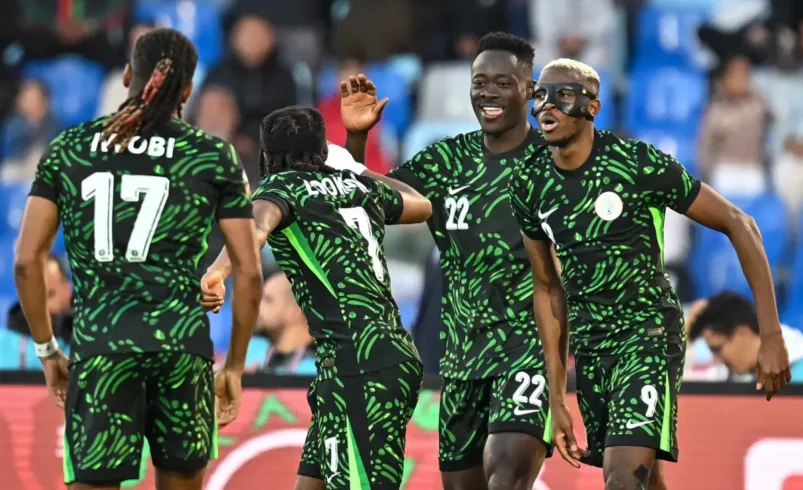
Meanwhile, the storm surrounding the final did not emerge in isolation; it was preceded by lingering bitterness from the semi-final between Nigeria and Morocco.
That encounter, officiated by a Ghanaian referee, became a lightning rod for controversy after a series of disputed decisions.
Nigerian fans and pundits accused the referee of inconsistency, pointing to unpunished fouls and questionable calls that disrupted the Super Eagles’ rhythm.
The Ghanaian officiating crew faced intense backlash online, with critics framing the performance as emblematic of deeper refereeing issues within CAF competitions.
Although CAF defended the officials, the Nigeria–Morocco semi-final planted seeds of mistrust that later exploded during the final.
By the time Senegal and Morocco met in Rabat, confidence in officiating neutrality was already fragile.
The semi-final drama added fuel to the final’s fire, shaping how decisions were perceived rather than how they were made.
In hindsight, the controversies of both matches appear interconnected, forming a narrative arc of suspicion and scrutiny.
Together, they transformed AFCON 2025 from a tournament remembered for football into one remembered for fault lines that African football must urgently address.